
Labral Tear Treatment in Quakertown
SHOULDER LABRAL TEAR SPECIALISTS IN BUCKS COUNTY
Labral Tear Treatment in Quakertown, PA
A labral tear is an injury to the labrum, a ring of cartilage in the shoulder socket, and helps keep the ball of the upper arm in place. When the labrum is torn, individuals may experience shoulder pain, a catching or clicking sensation during movement, and a sense of looseness or instability. The severity of labral tears can vary, ranging from small, frayed areas due to wear and tear to larger tears that may result from a dislocation or a fall. To determine whether symptoms originate from the labrum, rotator cuff, biceps tendon, or a combination of these issues, early evaluation is important.
Patients often contact PA Pain & Spine Institute for evaluation when shoulder pain is paired with mechanical symptoms, weakness, or a feeling of instability. Common concerns include:
✅ Deep, aching pain inside the shoulder, especially when reaching overhead
✅ A catching, locking, popping, or grinding feeling when moving the arm
✅ A sense that the shoulder is loose, unstable, or may slip out of place
✅ Night pain, weakness, or loss of range of motion that limits work, lifting, or sports
DIABETIC NEUROPATHY SPECIALISTS
What Causes Spinal Arthritis?
Most spinal arthritis develops gradually as a result of age-related changes in the spine. Additionally, several factors can accelerate the process or increase the severity of symptoms:
Age-related degeneration: Cartilage in the facet joints gradually wears away with normal aging, most commonly beginning in the fourth and fifth decades of life
Mechanical overload: Repetitive bending, twisting, and heavy lifting accelerate facet joint wear over time
Previous spinal injury: Furthermore, prior fractures, dislocations, or surgery can alter spinal mechanics and accelerate arthritis at adjacent levels
Degenerative disc disease: Consequently, as discs lose height, increased mechanical stress transfers to the facet joints and accelerates cartilage breakdown
Obesity: In particular, excess body weight increases mechanical load on the lumbar facet joints, accelerating wear
Genetic factors: Family history of spinal arthritis or degenerative joint disease increases individual risk

What Causes a Labral Tear?
The shoulder is a highly mobile ball-and-socket joint that allows a wide range of motion, but its naturally shallow socket contributes to inherent structural instability. According to the American Academy of Orthopaedic Surgeons (AAOS), the labrum – a fibrocartilaginous structure, plays a crucial role in deepening this socket, thereby providing a more secure fit for the head of the upper arm bone (humerus). In addition to enhancing joint stability, the labrum is integral to the shoulder’s overall function, serving as an attachment point for several ligaments that stabilize the joint and the biceps tendon, which is important for arm movement.

Labral Tear Treatment Options
Image-guided shoulder joint injection
Anti-inflammatory medication placed into the shoulder joint under ultrasound or X-ray guidance
*This is done outpatient and does not require anesthesia
Platelet-rich plasma (PRP) therapy
A regenerative injection prepared from your own blood for persistent pain, especially when nearby tendons are also involved
*This is done outpatient and does not require anesthesia

Viscosupplementation
Hyaluronic acid injections for patients whose degenerative labral tear occurs alongside shoulder arthritis
*This is done outpatient and does not require anesthesia
Minimally Invasive, Research-Supported Treatments
Image-Guided Shoulder Joint Injections
When a labral tear results in painful inflammation within the shoulder joint, your physician might recommend administering an injection that combines corticosteroids with a numbing agent. This treatment aims to reduce inflammation and alleviate pain, thereby improving mobility and function. To enhance injection precision, our experienced physicians use imaging techniques such as ultrasound or X-ray guidance to ensure the medication is accurately targeted to the affected area within the joint.
What to expect: The injection is completed during a single office visit using local numbing. You go home the same day and can usually resume light activity under your provider’s guidance.
*Outpatient. Does not require general anesthesia.
Platelet-Rich Plasma (PRP) Therapy
Platelet-Rich Plasma (PRP) therapy begins with drawing a small sample of your own blood. The sample is centrifuged to concentrate platelets, which contain growth factors involved in tissue healing. The concentrated platelets are then injected into the affected area of the shoulder under ultrasound guidance, allowing the provider to see the target tissue and deliver the PRP precisely.
PRP may be considered for patients with ongoing shoulder pain who have not improved enough with rest, medication, and physical therapy, or who prefer to limit repeated steroid injections. Research on PRP specifically for labral tears is still limited, so your provider will review your imaging, the tissues involved, and your goals before recommending it.
*Blood draw and injection are completed in the same outpatient visit, with no incisions.
Ultrasound-Guided Prolotherapy
Prolotherapy uses a dextrose-based solution to stimulate repair in weakened ligaments and soft tissues. Because the labrum works with the shoulder’s ligaments and joint capsule to maintain joint stability, providers may consider prolotherapy for patients whose labral tear is accompanied by a sense of looseness or recurrent instability. Evidence specific to labral tears is limited, and your provider will explain whether this option is appropriate based on your exam and imaging findings.
What to expect: Each session takes about 30 minutes in our office. Many patients receive 3-6 sessions spaced several weeks apart. Mild soreness for 24-48 hours is normal.
Viscosupplementation for Labral Tears With Arthritis
Degenerative labral tears often develop alongside shoulder arthritis. For these patients, viscosupplementation places hyaluronic acid into the shoulder joint under imaging guidance to improve lubrication and cushioning. The in-office procedure takes less than 30 minutes and requires no downtime. Viscosupplementation treats the arthritis component of shoulder pain; it does not repair the labrum itself.
Physical Medicine, Rehabilitation, and Medication Management
Our board-certified physical medicine and rehabilitation (PM&R) physicians develop a rehabilitation plan tailored to the individual’s needs. Early care focuses on avoiding the movements that provoke pain and restoring a gentle range of motion. As symptoms settle, the program progresses to strengthening the rotator cuff and shoulder blade muscles, which help hold the ball centered in the socket. When appropriate, your provider may coordinate with physical therapists so your in-office treatment and home program work together.
Our specialists may suggest the use of non-opioid medications or anti-inflammatory drugs to effectively reduce pain and promote better sleep during your recovery process. These options can help manage discomfort while minimizing the risk of dependency associated with stronger medications. Before prescribing any medication, your healthcare provider will conduct a thorough review of your medical history, including any existing medical conditions, allergies, and other medications you may be taking. This careful assessment ensures that the prescribed treatment is safe and suitable for your individual needs.
Frequently Asked Questions About Labral Tears
Can a shoulder labral tear heal without surgery?
Many labral tears can improve with nonsurgical treatment. According to the American Academy of Orthopaedic Surgeons (AAOS), this approach often relieves symptoms for wear-and-tear-related tears, minor SLAP tears, and first-time dislocations without fractures. Nonsurgical care demonstrates success rates ranging from 22% to 85%, depending on the type of tear and the patient’s activity level. However, tears that result in recurrent dislocations are more likely to require surgical evaluation.
What does a labral tear feel like?
Many people experience a deep ache in the shoulder that intensifies with overhead or reaching movements. Additionally, some may notice sensations of catching, clicking, or locking, and might feel that their shoulder is loose or on the verge of slipping out of place. Nighttime pain and weakness are also common symptoms.
What is the difference between a labral tear and a rotator cuff tear?
The labrum is a cartilage structure that stabilizes the shoulder joint, while the rotator cuff comprises four muscles and tendons responsible for lifting and rotating the arm. Both can lead to shoulder pain and weakness, often occurring concurrently. A comprehensive evaluation, including a hands-on examination, in-office ultrasound, and MRI, can help pinpoint the main source of your discomfort.
How is a labral tear diagnosed?
Diagnosis starts with a physical examination of the shoulder for pain or instability. X-rays assess the bones, while an MRI or MR arthrogram provides detailed images of the labrum. Any single test may not reliably confirm a SLAP tear, so providers may combine exam findings with imaging results for a complete assessment.
How long does recovery from a labral tear take?
Recovery from a labral tear depends on both the type and size of the tear. Many patients who opt for nonsurgical treatment will participate in a structured rehabilitation program that lasts several weeks to a few months. If surgery is necessary, the American Academy of Orthopaedic Surgeons (AAOS) indicates that complete healing of the shoulder typically occurs within 4 to 6 months.
Common Symptoms of a Labral Tear
- Deep, aching pain inside the shoulder
- Pain with overhead activities, reaching, or throwing
- Catching, locking, popping, or grinding with movement
- A feeling that the shoulder is loose, unstable, or may dislocate
- Pain at night or with everyday tasks
- Decreased range of motion and shoulder strength
When to Seek Urgent Care
Seek prompt medical attention if your shoulder dislocates or looks visibly deformed, if you cannot move your arm after a fall or injury, or if you notice sudden severe pain, swelling, and bruising. Also seek care right away for numbness, tingling, or coldness in the arm or hand, or for a hot, red, swollen shoulder with fever, which can signal infection.
How We Diagnose a Labral Tear
Physical Examination: Your provider will review how your symptoms started, your activities, and your medical history. They will move your shoulder into specific positions to check for pain, catching, and instability, and test the biceps tendon and rotator cuff.
Musculoskeletal Ultrasound: This in-office imaging provides a real-time view of the tendons and soft tissues around the shoulder. It helps assess rotator cuff and biceps involvement and guides injections accurately.
X-ray: X-rays help to check for any fractures, bone loss in the socket after a dislocation, and arthritis.
MRI or MR Arthrogram: MRI is the best imaging modality for soft-tissue injuries such as labral tears. An MR arthrogram enhances the MRI by adding contrast dye to the joint, allowing for a more detailed view of smaller tears. Your healthcare provider will recommend the appropriate imaging study based on your examination.
EMG / Nerve Conduction Testing: If you have numbness, tingling, or weakness in the arm, your provider may recommend an EMG test to determine whether a pinched nerve in the neck is contributing to your symptoms.
Research insight:
Accuracy matters in the shoulder: a systematic review and meta-analysis of 9 clinical studies (514 patients) and 4 cadaver studies (300 shoulders) found that ultrasound guidance improved injection accuracy compared with landmark-based injections for shoulder joint injections –Aly et al., British Journal of Sports Medicine, 2015.
Common Causes
Labral tears result from a single traumatic event, such as falling onto an outstretched arm, absorbing a direct blow to the shoulder, experiencing a sudden pull while lifting a heavy object, or undergoing a shoulder dislocation, in which the humerus comes out of the socket. Furthermore, labral tears can develop gradually over time, particularly in individuals who engage in repetitive overhead activities, such as athletes in sports like baseball, swimming, or weightlifting. Age-related wear and tear can also contribute to labral weakening, making it more susceptible to injury.
StatPearls, a clinical reference from the National Library of Medicine, reports that tears of the upper labrum are found in an estimated 6% to 26% of shoulder arthroscopies, with even higher rates reported in overhead athletes. Because these tears frequently coexist with rotator cuff or biceps problems, a labral tear seen on imaging is not always the main source of pain, which is why a careful exam matters.
- A fall onto an outstretched arm or a direct blow to the shoulder.
- A shoulder dislocation or a partial dislocation (subluxation).
- Repetitive overhead motions, such as throwing, swimming, playing tennis, or performing overhead work.
- Heavy lifting, weightlifting, or a sudden pull on the arm.
- Age-related wear of the cartilage, often associated with shoulder arthritis.
Labral Tear Types We Evaluate:
SLAP tear: A tear at the top of the socket where the biceps tendon attaches, common in throwers, overhead athletes, and manual laborers
Bankart tear: A tear at the front and lower part of the socket, typically after the shoulder dislocates forward
Posterior labral tear: A tear at the back of the socket, linked to injury, repetitive pushing, or weightlifting
Degenerative labral tear: Fraying of the labrum from age-related wear, often seen with shoulder arthritis
Why Choose PA Pain & Spine Institute?
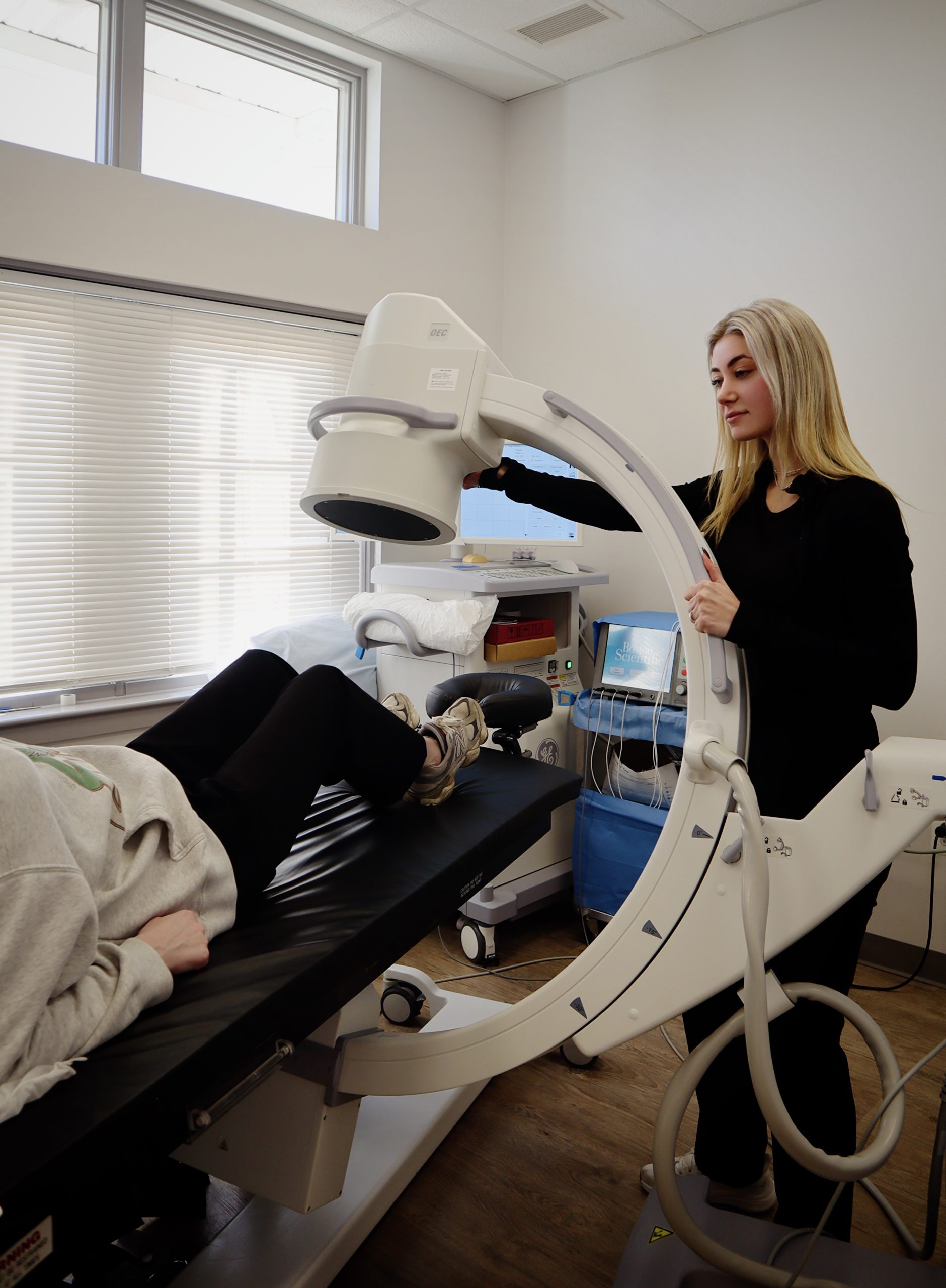
At PA Pain & Spine Institute in Chalfont and Quakertown, our goal extends beyond managing pain. We focus on identifying the cause of your shoulder symptoms and helping you return to reaching, lifting, sleeping, and working with greater comfort. Patients generally receive necessary treatments, including labral tear evaluation, imaging review, and injection-based treatments, in our office, so care is easier to schedule and less disruptive to your day. Patient visits are completed in an outpatient setting in a single day without visiting other facilities or the hospital.
Easy, Convenient Care Without the Hospital
- Precise, image-guided procedures: Our techniques for shoulder joint and soft-tissue injections are highly precise and incorporate advanced technology. By utilizing cutting-edge methods, we aim to enhance both the effectiveness of the treatment and the safety of our patients.
- Treatment options beyond steroid shots: Our treatment may include PRP, prolotherapy, and viscosupplementation, depending on your tear type and imaging findings.
- Coordinated care from diagnosis through recovery: Evaluation, imaging, in-office procedures, and rehabilitation guidance occur within a single, connected care pathway, with surgical referral when needed.
Quakertown Pain Management
- Experienced, Board-certified physicians: Our care is delivered by a team of highly skilled, board-certified physicians: Dr. Robert Kelly, Dr. David Bozak, and Dr. Jeffrey Boyd. Each physician has extensive training in pain medicine and valuable experience to provide you with the best possible care.
- Convenient access and office hours: We offer care in Chalfont and Quakertown and accept most major insurance plans, including Medicare. Chalfont is open Monday-Thursday, 8:00 am-6:00 pm; Quakertown is open Tuesday and Wednesday, 8:00 am-6:00 pm.
- Trusted by patients: PA Pain & Spine Institute has a 4.8-star rating from over 160 satisfied patients.
Take the Next Step
A labral tear does not have to mean giving up overhead activities, sports, or a good night’s sleep. Don’t let shoulder pain or instability interfere with your work or daily life. Schedule a consultation to:
- Receive a thorough evaluation of your shoulder pain, catching, or instability
- Confirm whether a labral tear, rotator cuff injury, biceps problem, or arthritis is the source of your symptoms
- Explore in-office options such as image-guided injections, PRP, prolotherapy, and viscosupplementation
- Develop a personalized treatment and shoulder-strengthening plan

References
- American Academy of Orthopaedic Surgeons. Shoulder Joint Tear (Glenoid Labrum Tear). OrthoInfo. <https://www.orthoinfo.org/diseases–conditions/shoulder-joint-tear-glenoid-labrum-tear/>
- Schultz KA, Nelson R. Superior Labrum Lesions. In: StatPearls [Internet]. Treasure Island (FL): StatPearls Publishing; 2025. Updated May 1, 2023. https://www.ncbi.nlm.nih.gov/books/NBK557662/
- Edwards SL, Lee JA, Bell JE, Packer JD, Ahmad CS, Levine WN, Bigliani LU, Blaine TA. Nonoperative treatment of superior labrum anterior posterior tears: improvements in pain, function, and quality of life. Am J Sports Med. 2010;38(7):1456-1461. doi:10.1177/0363546510370937.
- Aly AR, Rajasekaran S, Ashworth N. Ultrasound-guided shoulder girdle injections are more accurate and more effective than landmark-guided injections: a systematic review and meta-analysis. Br J Sports Med. 2015;49(16):1042-1049. doi:10.1136/bjsports-2014-093573.
- PA Pain & Spine Institute. Viscosupplementation for Shoulder Arthritis. <https://pennpain.com/viscosupplementation-for-shoulder-arthritis-in-chalfont/>
- PA Pain & Spine Institute. Meet the Providers. <https://pennpain.com/meet-the-providers/>
The information on this page is for general educational purposes only and does not constitute medical advice. Treatment recommendations are based on individual clinical evaluation. Individual results may vary, and no specific outcomes are guaranteed. This content does not create a provider–patient relationship.
Proudly serving Bucks County patients with individualized, evidence-based care focused on improving function, supporting mobility, and helping patients pursue their personal health goals.

