
Board-certified Pain Specialists
Facet joint pain is characterized by discomfort in the neck or back that originates from the facet joints, the small paired joints located at the rear of each spinal vertebra. These joints play a crucial role in facilitating movement and ensuring stability. When a facet joint becomes irritated or arthritic, it can result in localized pain, as well as achiness that may extend to surrounding areas.
Bulging disc pain can interfere with sitting, standing, sleeping, and almost everything in between. At PA Pain & Spine Institute, our team provides bulging disc treatment in Chalfont, PA. Our focus is non-surgical, evidence-based care. Importantly, most patients respond well to minimally invasive options. As a result, our specialists start with the least invasive treatment that fits the diagnosis. Furthermore, we tailor every plan to the patient, the imaging, and the specific source of pain.
Common symptoms patients describe:
✅ Lower back or neck pain that worsens with sitting or bending
✅ Radiating pain, tingling, or numbness in the legs, feet, arms, or hands
✅ Muscle weakness when walking, climbing stairs, or gripping objects
✅ Sharp or burning pain triggered by coughing, sneezing, or twisting
✅ Reduced flexibility or stiffness that limits daily activity
Facet joints have cartilage and a joint capsule, much like other moving joints in the body. Any changes in the cartilage, bone, capsule, or nearby tissue can make a joint sensitive. Possible causes and contributing factors of facet joint pain may include:
You may consider scheduling an evaluation when you have neck or back pain:
Seek prompt medical attention for severe pain after a significant injury, pain with fever, unexplained weight loss, or worsening weakness or numbness.
New loss of bladder or bowel control, numbness in the groin or saddle area, sudden major weakness, or trouble walking can signal a neurologic emergency. Call 911 or go to the nearest emergency department.
Treatment options vary based on the location, severity, and duration of your pain, as well as your overall health and how it affects your daily life. Most individuals begin with conservative care; image-guided procedures may be considered if they align with the diagnosis and the benefits outweigh the risks.

Small nerves known as medial branches carry pain signals from the facet joints. During a medial branch block, your physician uses live X-ray guidance to inject a small amount of numbing medication near these nerves. Primarily, this procedure serves a diagnostic purpose, helping to determine if a specific facet joint is responsible for your pain and whether radiofrequency ablation could be beneficial. The relief provided by the numbing medication is temporary, and you will monitor any changes in your pain levels and activity while it takes effect.

A facet joint injection administers medication directly into the joint, whereas a medial branch block targets the surrounding nerves. Current guidelines recommend medial branch blocks for determining candidates who are likely to benefit from radiofrequency ablation, as they may be more effective than facet joint injections for this purpose. Surgical Referral Surgery is generally not considered a standard treatment for facet joint pain. However, a surgical consultation may be reasonable if symptoms stem from other structural issues, such as instability, spinal stenosis, large facet cysts, fractures, spinal deformities, or nerve compression.

A clinician may suggest a short course of anti-inflammatory medication, acetaminophen, a topical treatment, or another non-opioid alternative based on your medical history. Medication tends to be most effective when integrated into a plan that emphasizes movement and functionality. It is important to refrain from starting or combining pain medications without professional guidance, as certain options may pose risks for individuals with specific health conditions or drug interactions. Surgical Referral Surgery is generally not considered a standard treatment for facet joint pain. However, a surgical consultation may be reasonable if symptoms stem from other structural issues, such as instability, spinal stenosis, large facet cysts, fractures, spinal deformities, or nerve compression.

Physical therapy may include gentle movement, posture training, gradual strengthening, and core or neck stability work. A therapist can also show you safer ways to lift, sit, and exercise. During a flare, they can help you adjust painful activities and ease back into movement to restore useful mobility and build tolerance without triggering symptoms again.

Radiofrequency Ablation Radiofrequency ablation (RFA) is a procedure that utilizes a specialized needle to deliver controlled heat to a medial branch nerve, effectively disrupting its ability to transmit pain signals. Fluoroscopic imaging and nerve testing ensure accurate needle placement. For patients who receive a positive diagnostic block, RFA can provide longer-lasting relief, typically lasting 6 to 12 months, although individual outcomes may vary. The treated nerve may eventually regenerate, which can result in the return of pain, and the procedure can be repeated if necessary. Your physician will review the potential risks, medications, aftercare, and alternative treatment options prior to proceeding with RFA. It is important to note that RFA does not eliminate arthritis or alter joint structure.

Heat or ice, short movement breaks, and a better workstation setup can help you manage a flare. Engaging in regular low-impact activity also supports strength and function over time. Maintaining a healthy weight and not smoking also supports spine health. Your clinician can determine which activities are safe for you.

Patients who respond to radiofrequency ablation (RFA) often experience pain relief lasting between six and twelve months, though the results can vary significantly. As the treated nerve may regrow over time, some may experience a return of pain. It’s important to understand that RFA alleviates pain signaling but does not cure arthritis or eliminate the affected joint. If pain returns and the diagnosis remains valid, the treatment can be repeated.
An MRI can reveal arthritis, joint enlargement, cysts, and nerve compression, assisting in diagnosis, but it cannot determine the source of pain. Facet arthritis is prevalent among older adults, with approximately 89 percent of those aged 60 to 69 showing signs of it on scans, yet many do not experience any pain.
A medial branch block involves injecting numbing medication near the small nerves responsible for transmitting pain signals from a facet joint, primarily to help diagnose the source of your pain. Conversely, a facet joint injection administers medication directly into the joint itself. Although both procedures aim to relieve pain, they target different areas and serve distinct purposes.
Facet arthropathy signifies structural wear or disease in a facet joint, which can be identified through imaging. In contrast, facet joint syndrome indicates that symptoms are associated with that joint. It is important to note that many individuals may have facet arthropathy without experiencing pain; therefore, imaging results alone do not confirm the diagnosis of facet joint syndrome.
Most individuals show improvement through physical therapy, modifications in activity, exercise, home care, and appropriate medications. In cases where symptoms persist and a facet joint origin is confirmed, diagnostic blocks or radiofrequency ablation may be considered. Surgical intervention is rarely indicated for facet joint pain.
Facet joint pain may develop gradually as arthritis progresses or suddenly following an injury. The discomfort can be constant, intermittent, or may flare up at specific times. Common characteristics of facet joint pain include:
Pain originating from the lumbar facet joints is generally felt in the lower back, but it can also radiate into the buttocks, hip, groin, or upper thigh regions. However, pain extending below the knee is less commonly associated with facet joint issues, although multiple conditions can coexist. Estimates indicate that lumbar facet joints account for approximately 15% to 41% of chronic low back pain.
Cervical facet joint pain is primarily experienced in the neck but can also radiate to the shoulders, upper back, or head, often intensifying with movement. While this text addresses neck and lower back pain, persistent mid-back pain should be evaluated separately. Symptoms such as numbness or weakness may indicate nerve involvement. Many spinal conditions share overlapping symptoms, and no single sign can definitively determine that facet joints are the source of pain.
Facet joint pain diagnosis is a stepwise process designed to identify the likely source of pain and rule out conditions that require different care.
Your physician may ask about the origin of your pain, the areas it radiates to, whether any movements affect it, how long it has lasted, and how it limits your normal movements. The exam may look at posture, spinal movement, tenderness, strength, reflexes, sensation, balance, and signs of nerve irritation.
Note facet-related pain caused by bending backward or twisting often lacks specificity, as similar discomfort may arise from discs, muscles, the sacroiliac joint, spinal stenosis, or other structures.
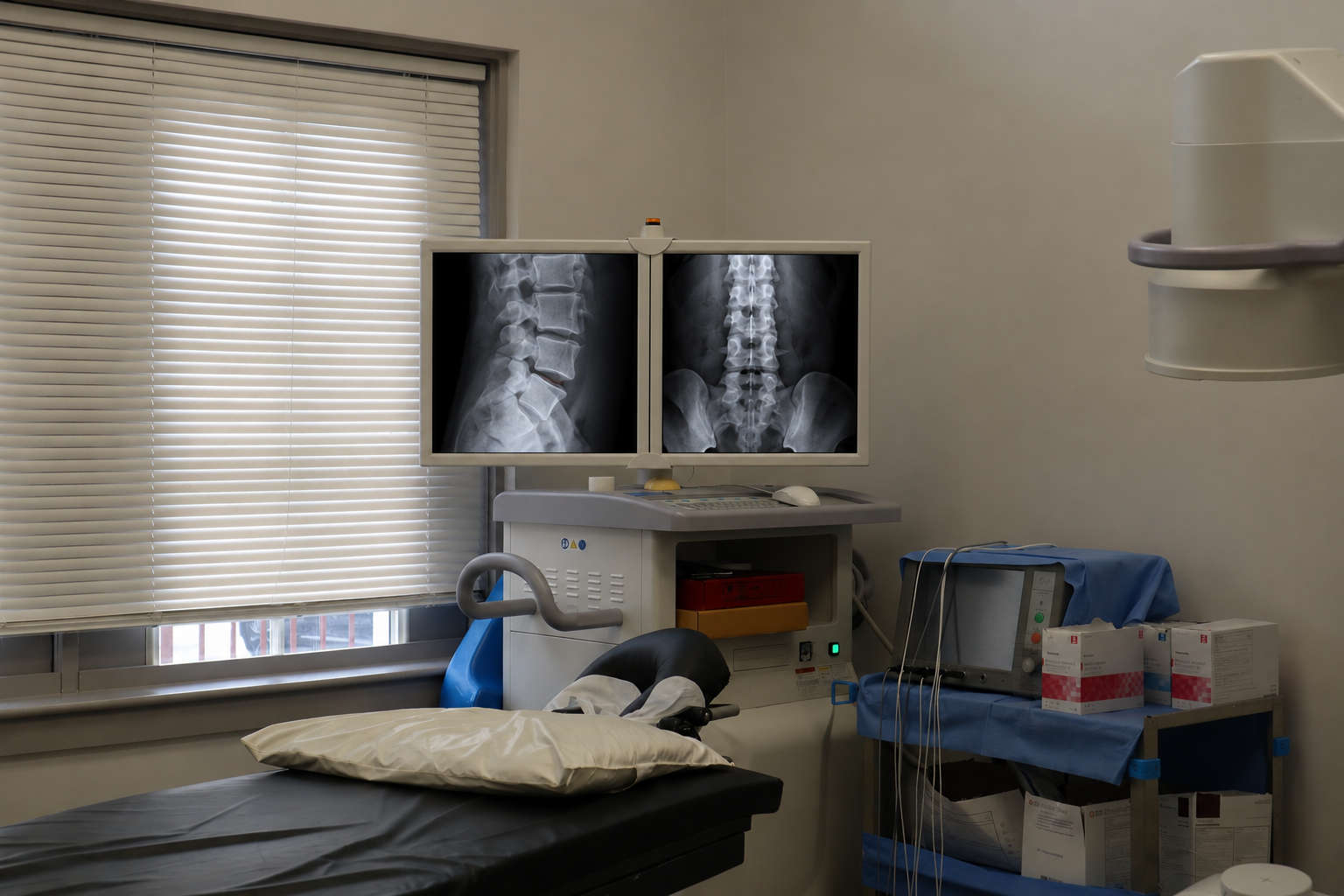
If your medical history and examinations point to arthritis, injury, spinal stenosis, instability, a cyst, or another cause, an X-ray, MRI, or CT scan may be appropriate. Furthermore, imaging facilitates planning certain procedures and checking for competing diagnoses too.
In certain cases, imaging possesses limitations, as it cannot specify the exact joint. It is possible for a person to experience facet-mediated pain even when scans reveal no significant abnormalities. Facet joint arthritis is quite prevalent in older adults and often goes asymptomatic. Interestingly, research indicates that approximately 89 percent of individuals aged 60 to 69 show signs of facet joint osteoarthritis on imaging, yet many of them do not report any associated pain.
A diagnostic medial branch block is the most reliable method to test if a facet joint is causing your pain. Meaningful temporary relief following the block increases confidence that the targeted joint is involved.
It is worth noting that a block is, in certain cases, not an entirely reliable test, as it has a certain false-positive rate. Therefore, your physician may recommend a second confirming block before proceeding with radiofrequency ablation. Additionally, there is variation in recommendations regarding what constitutes a positive outcome in terms of pain relief. Your physician will explain to you what constitutes a meaningful result and how it will influence your subsequent treatment decisions.
Persistent neck or back pain can make everyday movements frustrating. A focused evaluation can help clarify what is driving your symptoms. It may be a facet joint, a spinal nerve, a disc, a muscle, or another structure. From there, we can discuss which treatment options fit your needs.
Medical Disclaimer: The information provided on this page is for educational purposes only and does not constitute medical advice. Individual treatment outcomes vary. Please consult a qualified medical provider at PA Pain & Spine Institute to determine whether any treatment discussed here is appropriate for your specific condition.