
Distal Biceps Tendinopathy Treatment in Quakertown, PA
Elbow & Arm Pain Specialists in Bucks County
Distal Biceps Tendinopathy Treatment in Quakertown, PA
Distal biceps tendinopathy is the irritation or partial tearing of the tendon that connects the biceps muscle to the elbow, causing pain and weakness when lifting or rotating the forearm. It typically develops from repetitive strain or sudden heavy loading, and continued use without rest can progress to a full tendon rupture.
Patients typically seek medical consultation when they experience:
:
✅ Pain or tenderness at the front of the elbow.
✅ Pain when bending the elbow or rotating the forearm.
✅ Weakness when lifting objects or turning the palm upward.
✅ Discomfort that worsens with repetitive lifting or pulling.
✅ Tenderness near the elbow crease during activity.
DIABETIC NEUROPATHY SPECIALISTS
What Causes Spinal Arthritis?
Most spinal arthritis develops gradually as a result of age-related changes in the spine. Additionally, several factors can accelerate the process or increase the severity of symptoms:
Age-related degeneration: Cartilage in the facet joints gradually wears away with normal aging, most commonly beginning in the fourth and fifth decades of life
Mechanical overload: Repetitive bending, twisting, and heavy lifting accelerate facet joint wear over time
Previous spinal injury: Furthermore, prior fractures, dislocations, or surgery can alter spinal mechanics and accelerate arthritis at adjacent levels
Degenerative disc disease: Consequently, as discs lose height, increased mechanical stress transfers to the facet joints and accelerates cartilage breakdown
Obesity: In particular, excess body weight increases mechanical load on the lumbar facet joints, accelerating wear
Genetic factors: Family history of spinal arthritis or degenerative joint disease increases individual risk

Understanding Distal Biceps Tendinopathy
Distal biceps tendinopathy affects the tendon that connects the biceps muscle to the radius bone near the elbow. This tendon helps bend the elbow and rotate the forearm so the palm faces upward. Repetitive strain, heavy lifting, or sudden increases in activity can irritate or damage the tendon.
Symptoms may develop gradually or begin after a strenuous activity. Without appropriate care, symptoms may persist and interfere with everyday tasks, including lifting, carrying, and turning objects.

Research insight: MRI can help assess the size and location of a partial tear, tendon degeneration, and associated abnormalities. However, imaging findings should be interpreted alongside symptoms and physical examination because tendon changes can also appear in people without elbow pain.
Source: 2024 review, Current Concepts in the Aetiology, Assessment and Management of Partial Distal Biceps Tendon Tears.
Distal Biceps Tendinopathy Treatment Options

Medication Management
Oral and topical medications, when appropriate, to help manage elbow discomfort and inflammation while supporting daily activities and rehabilitation.
*This is done outpatient, without general anesthesia

Image-guided injections
Ultrasound-guided injections may be considered for certain associated sources of elbow pain, such as inflammation of the bicipitoradial bursa. Treatment depends on clinical findings.
*This is done outpatient, without general anesthesia

Physical Therapy
Guided rehabilitation programs focused on improving elbow mobility, rebuilding biceps strength, and gradually restoring forearm function.
Minimally Invasive, Research-Supported Treatments
Treatment depends on the severity of the tendon injury, the symptoms you experience, and how the condition affects your daily activities. A healthcare provider can evaluate your symptoms and help determine the most appropriate approach.
Physical Medicine, Rehabilitation, and Medication Management
A structured rehabilitation program may help improve elbow mobility, restore strength, and gradually increase the tendon’s ability to tolerate physical activity. Exercises are selected according to your symptoms and functional limitations.
PRP Therapy
PRP injections may be considered for selected patients with persistent distal biceps tendinopathy. The procedure uses a concentrated preparation of the patient’s own platelets, delivered near the affected tendon under image guidance. Although early research has reported promising results, evidence specific to distal biceps injuries remains limited. A 2025 retrospective study examined ultrasound-guided corticosteroid injections in 52 patients with partial distal biceps tears involving less than 50% of the tendon footprint. Surgery was avoided in 35% of patients, although 65% ultimately underwent surgical reconstruction. The study was observational and does not establish that injections are appropriate for every patient.
Image-Guided Injections
Image-guided injections may be considered when inflammation involving the tissues surrounding the distal biceps tendon contributes to persistent elbow pain. Ultrasound guidance helps the physician visualize the affected structures and accurately target the intended injection site. A 2022 review of partial distal biceps tendon tears identified two small case series investigating ultrasound-guided PRP injections for distal biceps tendinopathy. Both reported promising outcomes, but the authors emphasized that larger controlled studies are needed to establish effectiveness.
Frequently Asked Questions About Distal Biceps Tendinopathy
What is the difference between distal biceps tendinopathy and a tendon tear?
Distal biceps tendinopathy involves irritation or changes in the tendon near the elbow. A tendon tear involves partial or complete disruption of the tendon fibers. Symptoms can overlap, so a clinical evaluation may be needed to determine the extent of the injury.
Can distal biceps tendinopathy improve without surgery?
Many cases can be managed without surgery through activity modification, rehabilitation, and symptom management. However, a complete distal biceps tendon rupture may require surgical evaluation, particularly when significant strength is lost.
How long does distal biceps tendinopathy take to heal?
Recovery time depends on the severity of the injury, the duration of symptoms, and the activities placing stress on the tendon. Mild cases may improve with activity modification and rehabilitation, while more significant injuries may require additional treatment.
What activities should I avoid with distal biceps tendinopathy?
Activities that aggravate symptoms may include heavy lifting, repetitive pulling, biceps curls, and forceful forearm rotation. A healthcare provider or physical therapist can help determine which activities to modify and how to return to them gradually.
Can distal biceps tendinopathy cause weakness?
Yes. The distal biceps tendon helps bend the elbow and rotate the forearm so the palm faces upward. Tendon irritation or damage may cause pain during these movements and make lifting or carrying objects more difficult.
Common Causes of Distal Biceps Tendinopathy
- Repetitive lifting, pulling, or bending of the elbow.
- Heavy resistance training, particularly exercises involving biceps curls.
- Repeated forearm rotation, such as turning a screwdriver.
- Sudden increases in lifting intensity or physical activity.
- Age-related changes that affect tendon strength and resilience.
When to Seek Care
Consider seeking medical evaluation if elbow pain persists, limits your daily activities, or is accompanied by weakness when lifting or rotating your forearm.
A sudden popping sensation followed by bruising, swelling, a change in the shape of the biceps, or significant weakness may indicate a distal biceps tendon tear. Seek prompt medical evaluation, as a complete tear may require timely orthopedic assessment.
How We Diagnose Distal Biceps Tendinopathy
Diagnosis typically begins with a review of your symptoms, medical history, and physical activity. Your provider may examine the front of the elbow, assess tenderness, and evaluate elbow strength and forearm rotation.
Depending on the findings, additional testing may be recommended:
- Physical examination: Evaluates tenderness, movement, and strength around the elbow.
- Ultrasound: May help assess the distal biceps tendon and identify changes or tears.
- MRI: May be used when more detailed imaging is needed to evaluate the tendon and determine the extent of an injury.
Distal biceps tendinopathy can be difficult to distinguish from a partial tear.
Research insight: Tendinopathy and partial tendon tears can produce overlapping symptoms, including pain in the front of the elbow and weakness during elbow flexion and forearm rotation. Physical examination alone may not establish the extent of tendon damage.
Source: 2024 review, Current Concepts in the Aetiology, Assessment and Management of Partial Distal Biceps Tendon Tears.
Common Symptoms of
Distal Biceps Tendinopathy
Distal biceps tendinopathy typically causes pain and tenderness near the front of the elbow, along with possible weakness during elbow flexion and forearm supination. A sudden pop, bruising, visible change in the shape of the biceps, or sudden significant weakness may indicate a tendon rupture and warrants prompt medical evaluation.
- Pain or tenderness at the front of the elbow, particularly where the biceps tendon attaches to the radius bone in the forearm.
- Discomfort that worsens when bending the elbow, lifting objects, or rotating the forearm to turn a doorknob or use a screwdriver.
- Weakness when bending the elbow or turning the palm upward, such as when carrying groceries or lifting a cup.
- Pain that increases during repetitive lifting, pulling, or other activities that place strain on the biceps tendon.
- Tenderness or aching in the crease of the elbow that worsens with activity or when pressure is applied to the affected area.
- Discomfort when lifting with the palm facing upward, particularly when carrying heavier objects or performing resistance exercises.
Why Choose PA Pain & Spine Institute?
Convenient, Coordinated Outpatient Care
Coordinated care: Our physician team evaluates your symptoms, discusses diagnostic findings, and develops a treatment plan based on your condition and medical history.
Individualized treatment: Care may include medication management, physical medicine and rehabilitation, and other appropriate nonsurgical treatment options to help manage discomfort and improve function.
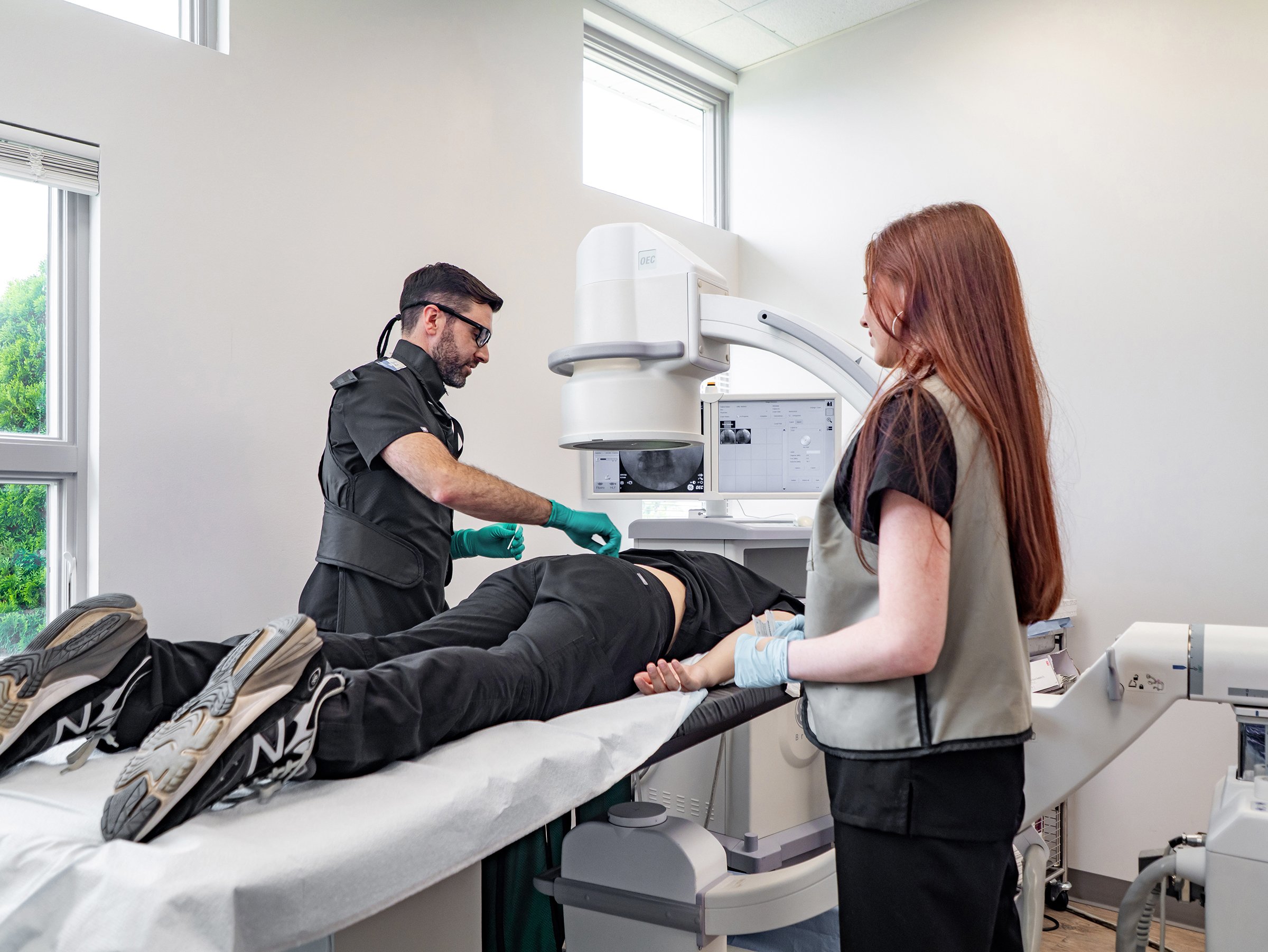
Convenient outpatient visits: Consultations, appropriate diagnostic testing, and eligible procedures are provided in an outpatient setting. Hospital admission or general anesthesia is not required for many services.
Take the next step
Patient-centered care: We are committed to helping patients understand their treatment options and make informed decisions about their care. PA Pain & Spine Institute has an average rating of 4.8 stars based on more than 900 patient reviews across locations.
Call 215-395-8888 or request an appointment online at the office nearest you.

References
2. Clinical Outcomes Following Treatment of Distal Biceps Tendon Partial Tears and Tendinopathy (2026)
3. Prevalence of Incidental Distal Biceps Signal Changes on MRI (2023)
4. Partial Tear of the Distal Biceps Tendon: Current Concepts (2022)
5. Is Nonoperative Management of Partial Distal Biceps Tears Really Successful? (2018)
6. Ultrasound-Guided Platelet-Rich Plasma Injection for Distal Biceps Tendinopathy (2015)
7. Single Injection of PRP for Refractory Distal Biceps Tendonitis (2016)
The information on this page is for general educational purposes only and does not constitute medical advice. Treatment recommendations are based on individual clinical evaluation. Individual results may vary, and no specific outcomes are guaranteed. This content does not create a provider–patient relationship.
Proudly serving Bucks County patients with individualized, evidence-based care focused on improving function, supporting mobility, and helping patients pursue their personal health goals.

