
What Causes Discogenic Pain?
Discogenic pain develops when the intervertebral discs that cushion the bones of the spine become a source of pain due to internal changes, resulting in inflammation, increased nerve sensitivity, and discomfort during everyday activities. become a source of pain. Common causes and contributing factors include:
- Age-related disc dehydration and loss of flexibility
- Small fissures or tears in the disc’s outer ring
- Repetitive bending, lifting, twisting, or vibration
- Prior back injury or cumulative mechanical stress
- Smoking, excess body weight, poor conditioning, and genetic factors
Disc degeneration is common and does not always cause symptoms. A clinical evaluation is needed to determine whether a disc is likely to be the source of your pain.
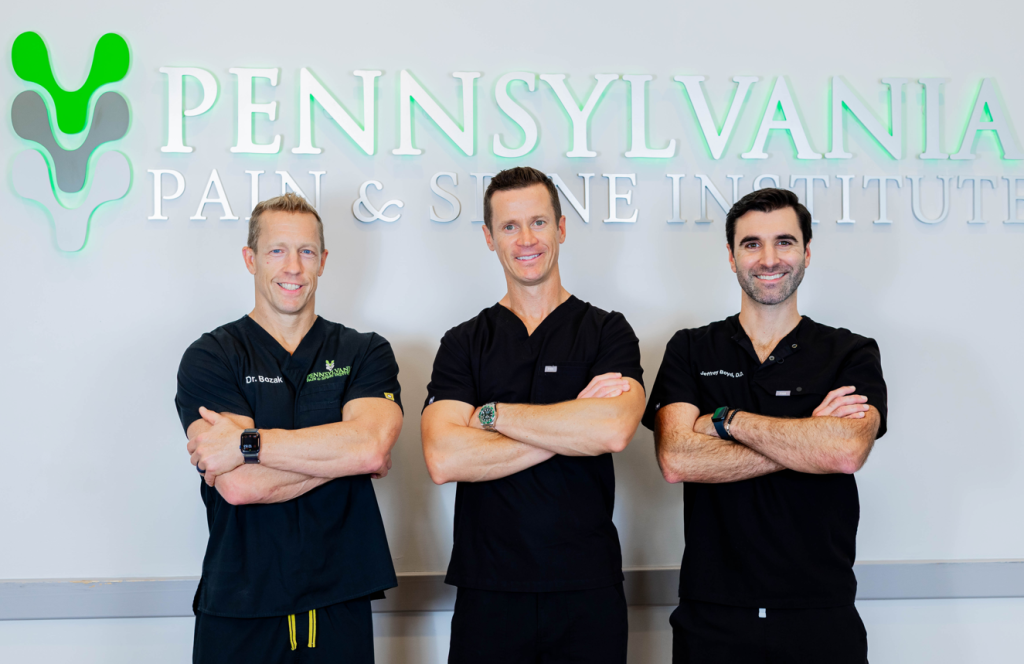
Discogenic Pain Specialists in Chalfont & Quakertown
At PA Pain & Spine Institute, our specialists evaluate persistent back pain to identify the underlying structures responsible for your symptoms. Discogenic pain commonly affects the lower back and is often described as a deep, central ache that intensifies with activities such as sitting, bending, lifting, or twisting.
Because disc changes on an MRI do not always correlate with pain, our team evaluates your symptoms, examination findings, imaging results, prior treatment, and personal goals, and proceeds with a general treatment plan discussion. We consider minimally invasive treatment options only when they fit the diagnosis.
At the PA Pain & Spine Institute, eligible patients can receive the ViaDisc NP procedure in our specialized procedure suites in Chalfont and Quakertown. Offering this procedure directly through our practice facilitates quicker access to treatment and minimizes the unnecessary waiting times.
Signs and Symptoms of Discogenic Pain
Discogenic pain can begin gradually or follow an injury. Symptoms may be persistent, or they may come and go in episodes. Common signs include:
- Pain centered in the lower back
- Deep, dull, aching, or pressure-like discomfort
- Pain that becomes worse with prolonged sitting
- Increased pain with bending forward, lifting, twisting, coughing, or sneezing
- Discomfort when moving from sitting to standing
- Pain that spreads into the buttocks, hips, groin, or upper thighs
- Back stiffness or reduced mobility
- Pain that interferes with sleep, work, exercise, or daily activities
Many individuals experience relief from pain by standing, walking, or changing positions. Symptoms like pain below the knee, numbness, tingling, or muscle weakness could indicate a herniated disc, spinal stenosis, or another issue affecting a nerve. If your pain is persistent or worsening and interferes with your daily activities, it’s important to seek a professional evaluation.
Our Comprehensive Approach to Discogenic Pain Diagnosis
While there is no definitive test that confirms a disc as the source of pain for every individual, we initiate the process with a detailed evaluation. This allows us to fully understand your symptoms and eliminate other potential causes, such as facet joint pain, sacroiliac joint dysfunction, muscle pain, spinal stenosis, herniated discs, vertebral endplate pain, fractures, infections, or inflammatory diseases.
Your evaluation may include:
- Review of your medical history, prior injuries, and previous treatments
- Physical and neurological examination
- Assessment of posture, spinal movement, strength, reflexes, and sensation
- X-rays or MRI when clinically indicated
- Diagnostic injections or additional testing in selected cases
X-rays can show spinal alignment, loss of disc height, arthritis, or instability. MRI provides a more detailed view of the discs, nerves, and nearby soft tissues. However, disc degeneration is also found in people without pain, so an abnormal MRI does not automatically mean that a particular disc is causing your symptoms.
In a provocative discography, fluid is injected into a disc to assess whether it reproduces a person’s typical pain. This test may be considered in carefully selected cases where the results are likely to have a substantial impact on treatment decisions.
This diagnostic process helps our specialists develop a personalized treatment plan based on your condition, health, and goals.
Discogenic Pain Treatment Options
Treatment varies based on the source and severity of pain, how long symptoms have been present, and how the condition affects your life. Most plans begin with nonsurgical care. A procedure is not automatically needed simply because an imaging study shows disc degeneration.
Physical Therapy + Activity Guidance
Adjusting activities in the short term can help relieve a painful flare-up, but extended bed rest may lead to stiffness and weakened strength. Physical therapy may incorporate core stabilization, controlled mobility, gradual strengthening, and posture training. The objective is to enhance function and foster confidence in movement while minimizing the risk of further irritation to the painful area.
This treatment is personalized to your symptoms, abilities, and activity goals.
Home Care + Lifestyle Support
Applying heat or ice, taking movement breaks, making ergonomic adjustments, and temporarily altering your lifting or exercise routine can help alleviate symptoms. Maintaining a healthy weight and avoiding smoking promote overall spinal health, while factors such as sleep, stress, and emotional well-being can influence how the nervous system processes chronic pain.
Your specialist can help you develop a safe plan for work, exercise, and daily activities.
Medication Management
Medication can be one part of a broader treatment plan. Depending on your health history, options may include anti-inflammatory medication or other non-opioid pain relievers. Recommendations are based on possible benefits, side effects, current medications, and medical conditions such as kidney disease, heart disease, ulcers, or pregnancy.
Do not begin or combine pain medications without appropriate medical guidance.
Image-Guided Procedures
Some patients have pain from more than one spinal structure. When symptoms suggest an irritated nerve or another pain source in addition to the disc, an image-guided injection may be considered for diagnostic or therapeutic purposes. Epidural steroid injections are generally used for inflamed spinal nerves rather than isolated pain arising only from within a disc.
These procedures are selected according to the specific pain generator identified during your evaluation.
VIA Disc Available in Our Chalfont and Quakertown Offices
PA Pain & Spine Institute offers VIA Disc procedure directly in specially equipped outpatient procedure suites at our Chalfont and Quakertown offices. This office-based pathway allows our team to coordinate treatment without scheduling a separate hospital visit and may help eligible patients access the procedure sooner.
The procedure itself typically takes 10 to 15 minutes. Actual scheduling depends on clinical evaluation, payer authorization, graft availability, and individual circumstances.
This procedure is offered in our office. Actual scheduling time depends on clinical evaluation, insurance or payer authorization, graft availability, and individual circumstances. No specific appointment date or treatment outcome is guaranteed.

When Should You See a Doctor?
You may want to schedule an evaluation if you experience:
- Back pain lasting more than several days
- Pain that does not improve with reasonable home care
- Recurring or increasingly severe episodes of back pain
- Pain triggered consistently by sitting, bending, lifting, or twisting
- Pain that limits sleep, work, exercise, or daily activities
- Pain traveling into an arm or leg
- Numbness, tingling, or weakness
Seek immediate medical attention if you experience severe pain after a significant injury, pain with fever or signs of infection, or rapid weakness or numbness. Those with a history of cancer or a weakened immune system should also seek prompt care for severe pain. Watch for warning signs like sudden loss of bladder or bowel control, numbness in the groin area, or significant leg weakness, which may indicate a neurological emergency. If you encounter any of these symptoms, go to the nearest emergency department or call 911 right away.
Why Choose PA Pain & Spine Institute?
At PA Pain & Spine Institute, our board-certified pain specialists prioritize non-surgical, minimally invasive solutions for managing neck pain. We provide evidence-based care tailored to each diagnosis for patients throughout Chalfont and Quakertown. Here’s what sets our care apart:
- Consistent, patient-focused, attentive support from the first visit through recovery.
- Comprehensive evaluations and imaging review when appropriate.
- Personalized treatment plans based on symptoms and diagnosis.
- Image-guided precision for safer, more accurate procedures.
- A strong preference for non-surgical, minimally invasive pathways.
- Two convenient office locations serving Chalfont and Quakertown.
Above all, our team helps patients navigate treatment decisions with clarity. Instead of recommending a single fixed path, our specialists walk each patient through every option and its realistic outcomes, so they feel confident to make an informed decision.
Take the First Step:
Discogenic pain can be disruptive and frustrating. Our team can help you understand the possible source of your symptoms, review nonsurgical and minimally invasive options, and determine whether in-office ViaDisc NP may be appropriate for you.
FAQ
What is discogenic pain?
Discogenic pain is discomfort that originates within an intervertebral disc. It usually causes axial pain centered in the lower back rather than pain that follows the path of a compressed nerve. Contributing factors may include inflammation, minor fissures, dehydration, and heightened nerve sensitivity within the disc.
Is discogenic pain the same as a herniated disc?
Discogenic pain typically originates from changes within the disc itself and often occurs without significant pressure on a nerve. In contrast, a herniated disc happens when disc material bulges through or beyond the outer ring, potentially irritating a nearby nerve. While these two conditions can occur simultaneously, their symptoms and treatment requirements may differ.
Can an MRI confirm discogenic pain?
An MRI can identify disc degeneration, fissures, herniation, and other spinal changes. It can also help rule out competing causes. However, MRI findings alone cannot prove that a specific disc is painful because similar changes are common in people without symptoms. Your specialist will compare imaging with your history and examination.
Is ViaDisc offered in the PA Pain & Spine Institute office?
Yes. PA Pain & Spine Institute offers ViaDisc NP in specially equipped procedure suites at our Chalfont and Quakertown locations. This facility helps patients access care faster and wait less time to schedule than with hospital-based scheduling.
How long does the ViaDisc NP procedure take?
The procedure itself typically takes approximately 10 to 15 minutes. It is performed on an outpatient basis under local anesthesia and may include light twilight sedation. Patients generally return home after a brief observation period. Appointment and recovery times vary by patient.
How quickly can I schedule in-office ViaDisc NP treatment?
Our facility is designed to reduce the delays that may occur when a procedure must be coordinated through a hospital or separate surgery center. Eligible patients may be able to schedule treatment within a much shorter time. For exact timing, you may consider speaking with our associates.
Can discogenic pain improve without surgery?
Yes. Many people manage symptoms through physical therapy, guided activity, exercise, lifestyle changes, and medication when appropriate. If pain continues despite conservative treatment, a specialist may discuss minimally invasive options based on the suspected pain source. Surgery is generally reserved for carefully selected cases.
References:
- Beall DP, Davis TT, Amirdelfan K, et al. Supplemental nucleus pulposus allograft in patients with lumbar discogenic pain: results of a prospective feasibility study. BMC Musculoskeletal Disorders. 2025;26:437. doi:10.1186/s12891-025-08701-0.
- Azeem N, Myers TJ, Tate JL, et al. Supplemental nucleus pulposus allograft in patients with lumbar discogenic pain: evaluation of clinical outcomes and quality of life in Medicare beneficiaries. Clinical Interventions in Aging. 2025;20:717-726. doi:10.2147/CIA.S523457.
- Brinjikji W, Luetmer PH, Comstock B, et al. Systematic literature review of imaging features of spinal degeneration in asymptomatic populations. AJNR American Journal of Neuroradiology. 2015;36(4):811-816. doi:10.3174/ajnr.A4173.
- DePalma MJ, Ketchum JM, Saullo T. What is the source of chronic low back pain and does age play a role? Pain Medicine. 2011;12(2):224-233. doi:10.1111/j.1526-4637.2010.01045.x.
- American College of Radiology. ACR Appropriateness Criteria: Low Back Pain. Revised 2021. https://acsearch.acr.org/docs/69483/Narrative/.
- VIVEX Biologics. VIA Disc NP: Procedure. https://viadiscnp.com/procedure/.
- PA Pain & Spine Institute. ViaDisc Procedure: Advanced Disc Regeneration Technology. https://pennpain.com/viadisc-procedure-advanced-disc-regeneration-technology/.
The information on this page is for general educational purposes only and is not medical advice. Services and treatment recommendations are based on individual clinical evaluation. Individual results may vary, and no specific outcomes are guaranteed. This content does not create a provider-patient relationship.

