
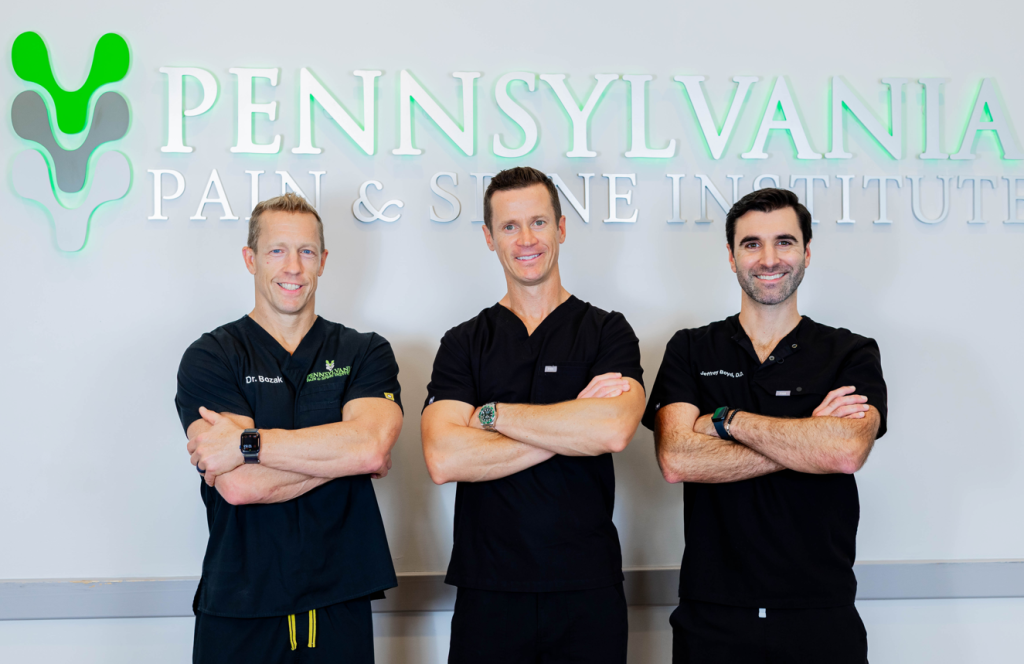
Chronic Pain Management in Chalfont, PA: Understanding Your Treatment Options
Chronic pain management in Chalfont, PA is more advanced than many patients realize. At Pennsylvania Pain & Spine Institute, our board-certified pain specialists take a diagnostic-first, minimally invasive approach — aiming to identify the underlying source of pain before recommending any treatment. For patients throughout Bucks County who have been managing pain on their own, or who have tried conservative care without lasting relief, understanding what modern pain management actually involves is an important first step.
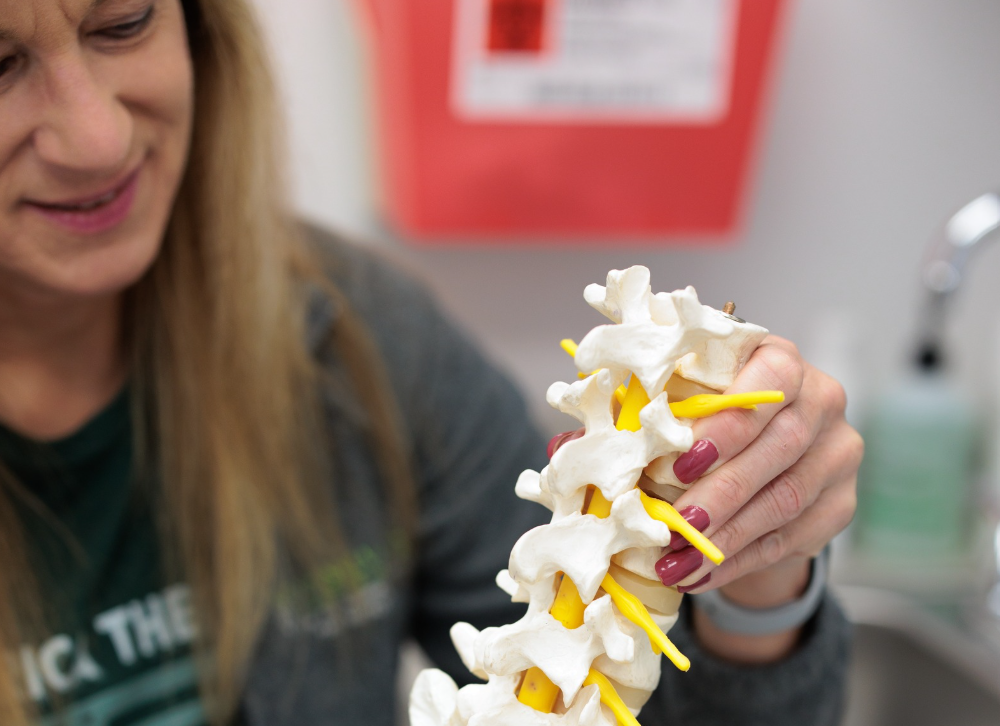
What Is Chronic Pain?
Chronic pain is pain that persists beyond three months, even after the original injury or illness has healed. Unlike acute pain, however, chronic pain often involves changes in the nervous system itself. As a result, the pain signal continues long after the tissue damage has resolved. Therefore, patients often require targeted treatment rather than simply waiting for symptoms to improve.
Chronic Pain Symptoms
Symptoms vary widely depending on the underlying condition. Common presentations include:
- Burning or aching pain in the back, neck, or extremities
- Radiating pain that travels into the arms or legs
- Stabbing or electric sensations, often associated with nerve involvement
- Dull, persistent pressure that worsens with activity or prolonged sitting
Clinicians recognize chronic pain as a distinct medical condition. Research published in BJA: British Journal of Anaesthesia describes chronic pain as “a common, complex, and distressing problem” that requires targeted clinical management rather than watchful waiting.¹
Why Does Chronic Pain Persist?
Many patients learn that chronic pain can continue even when imaging studies show no active injury. Specifically, the nervous system may become overactive and amplify pain signals beyond what the underlying tissue damage would explain. Consequently, early evaluation by a specialist matters. In other words, waiting for pain to resolve on its own is rarely the most effective strategy once symptoms have persisted for several months.

Common Conditions That Cause Chronic Pain
Chronic pain originates from a wide range of muscle, joint, spine, and nerve conditions. For example, patients may develop chronic pain from degenerative, inflammatory, neurologic, or post-surgical conditions.
At Pennsylvania Pain & Spine Institute, our team evaluates and treats patients across the full spectrum of chronic pain diagnoses. In many cases, chronic pain has more than one cause. Multiple pain generators may contribute to a patient’s symptoms at the same time. Notably, this is why accurate diagnosis is the foundation of effective treatment.
Conditions we Treat
- Chronic Back Pain is often driven by disc degeneration, facet joint arthritis, or spinal stenosis.
- Neck Pain is frequently related to cervical disc herniation or facet joint involvement.
- Sciatica and Nerve Pain includes compression or irritation of the sciatic nerve causing radiating leg pain.
- Arthritis and Joint Pain includes osteoarthritis of the spine, hips, and knees.
- Post-Surgical Pain includes pain that persists or develops following spinal or orthopedic surgery.
- Neuropathy includes nerve-related burning, tingling, or numbness, including diabetic peripheral neuropathy.
- Sports and Work Injuries are acute injuries that transition into chronic pain without proper intervention.
When Should You See a Pain Management Specialist?
Primary care providers manage many pain conditions successfully. However, certain patterns suggest that a referral to a pain management specialist is warranted. For instance, patients should consider scheduling an evaluation if:
- Pain has persisted for three months or longer, despite conservative treatment
- Pain is limiting daily activities such as walking, working, or sleeping
- Imaging findings (MRI, CT, or X-ray) have identified a structural source of pain
- Prior treatments — including physical therapy, oral medications, or chiropractic care — have provided incomplete or temporary relief
- Symptoms are worsening or spreading over time
- Pain is accompanied by numbness, tingling, or weakness in the arms or legs
Benefits of a Personalized Treatment Plan
Chronic pain affects each patient differently. Therefore, providers develop treatment plans that reflect the patient’s diagnosis, symptoms, lifestyle, and goals. Rather than relying on a single approach, providers often combine several therapies to address different aspects of pain.
For example, some patients respond well to medication management and physical therapy. In contrast, others may require interventional procedures to achieve meaningful relief. Regardless of the approach, providers continually evaluate progress and adjust treatment recommendations when necessary.
Additionally, personalized care allows providers to address changes in symptoms over time. As symptoms evolve, providers can modify the treatment plan to better match the patient’s needs. Likewise, providers can recommend additional diagnostic testing when new symptoms develop.
Beyond pain relief, providers focus on improving function and quality of life. Specifically, they help patients increase mobility, participate in daily activities, and pursue personal goals with greater comfort. As a result, many patients experience improvements that extend beyond pain scores alone.
Furthermore, a personalized treatment strategy helps patients understand their condition and treatment options. Consequently, patients can make informed decisions about their care. At the same time, providers can establish realistic expectations and measurable goals.
Ultimately, successful pain management requires collaboration between patients and providers. For this reason, open communication remains an important part of long-term care. When patients stay engaged in treatment, providers can respond more effectively to changes in symptoms and function.

How Is Chronic Pain Diagnosed?
Accurate diagnosis is the most critical step in chronic pain management. Treating the wrong pain generator may lead to poor outcomes regardless of how effective the treatment itself might be.
At Pennsylvania Pain & Spine Institute, diagnostic evaluation typically includes:
- Thorough medical history review, including prior treatments, imaging, and medication history
- Physical examination targeting the suspected pain source and neurologic function
- Advanced imaging review, including Magnetic Resonance Imaging (MRI), Computed Tomography (CT), and X-ray studies
- Diagnostic injections, which use a small volume of anesthetic to confirm whether a specific structure — such as a facet joint, disc, or nerve root — is the active pain generator
Can Chronic Pain Be Treated Without Surgery?
At PA Pain & Spine Institute, non-surgical and minimally invasive treatment is always the starting point. Surgery is considered only when conservative and interventional options have not provided adequate relief, or when a structural problem requires correction that cannot be addressed through other means.
Current clinical guidelines consistently recommend a stepwise approach: conservative care first, followed by targeted interventional treatments, with surgery reserved for carefully selected cases. At PA Pain & Spine Institute, our board-certified providers bring fellowship-trained expertise in spine, nerve, and joint pain. Our team’s priority is to address the underlying pain source without surgery. Many patients may be treated without surgery, depending on the underlying diagnosis and individual circumstances.

Treatment Options for Chronic Pain in Chalfont, PA
Treatment at PA Pain & Spine Institute is individualized. Our team does not apply a one-size-fits-all protocol. Instead, we develop a personalized care plan based on diagnosis, imaging findings, prior treatment history, and the patient’s functional goals.
The following treatment options are among those available at our Chalfont and Quakertown offices.
Medication Management
Oral and topical medications remain an important component of multimodal chronic pain care. Our providers evaluate each patient’s current medications, identify agents that are not providing adequate benefit, and recommend evidence-based adjustments. This may include anti-inflammatory medications, nerve pain agents (such as certain anticonvulsant or low-dose antidepressant medications), or topical therapies that reduce whole-body side effects.
Epidural Steroid Injections
Epidural Steroid Injections (ESI) deliver anti-inflammatory medication directly into the epidural space, the area surrounding the spinal cord, under real-time X-ray guidance (fluoroscopy). This targeted approach reduces inflammation around compressed nerve roots and can provide meaningful short- to medium-term relief for patients with disc herniations, spinal stenosis, or nerve root pain (radiculopathy).
ESI is one of the most widely studied interventional pain procedures. Our team performs fluoroscopy-guided injections at our Chalfont office, ensuring precise needle placement and consistent outcomes. For patients whose symptoms include radiating arm or leg pain, ESI is often a first-line interventional recommendation.
Radiofrequency Ablation
Radiofrequency Ablation (RFA) uses heat generated by radio waves to disrupt the nerve signals transmitting pain from a specific joint or spinal segment. It is most commonly used for facet joint pain, a frequent contributor to chronic neck and lower back pain, and for sacroiliac joint pain.
RFA is an outpatient procedure performed under real-time X-ray guidance (fluoroscopy). Because it targets the nerve fibers responsible for carrying the pain signal, relief relief may last longer than some injection-based treatments, in some cases six months to two years or more. Additionally, the procedure can be repeated when nerve regeneration occurs. Duration of relief varies by patient, diagnosis, and other clinical factors.
Platelet-Rich Plasma (PRP) Therapy
Platelet-Rich Plasma (PRP) therapy uses a concentrated preparation of the patient’s own blood platelets to support natural tissue healing and reduce inflammation. After a small blood draw, the sample is processed to concentrate the growth factors, which are then injected into the target structure, a disc, joint, or tendon, under imaging guidance.
PRP is one of several minimally invasive biologic treatment options available at PA Pain & Spine Institute. Research published in PM&R found that lumbar intradiscal PRP injections produced significant improvements in function and pain scores at 8-week follow-up in patients with disc-related low back pain. (3) PRP may be appropriate for patients with early to moderate disc degeneration, joint arthritis, or soft tissue conditions who want to pursue a biologic rather than medication-based approach. Clinical outcomes vary, and ongoing research continues to evaluate PRP’s effectiveness for specific conditions.
The ViaDisc NP Procedure
For patients with chronic low back pain related to Degenerative Disc Disease (DDD), the ViaDisc NP procedure offers a minimally invasive treatment option targeting the disc itself. ViaDisc delivers the natural cushioning tissue found inside a healthy disc, called the nucleus pulposus, sourced from a donor, directly into the damaged disc under real-time X-ray guidance.
Dr. Robert Kelly performs the ViaDisc procedure at PA Pain & Spine Institute. The procedure is outpatient, takes approximately 10 to 15 minutes, and requires no general anesthesia. It is supported by the VAST Randomized Controlled Trial, which found that injecting donor-derived disc tissue produced meaningful improvements in pain and function compared to a placebo injection in study participants. (4)
Spinal Cord Stimulation
Spinal Cord Stimulation (SCS) is an electrical nerve therapy (neuromodulation) that uses a small implanted device to deliver mild electrical impulses to the spinal cord, interrupting pain signals modifying pain signal transmission before the signals are perceived by the brain.
It is evaluated for patients who have not responded to other treatments, including those with failed back surgery syndrome, Complex Regional Pain Syndrome (CRPS), diabetic nerve pain, or ongoing arm or leg pain from a compressed nerve root.
Dr. David Bozak performs the full SCS procedure at PA Pain & Spine Institute, from the initial trial phase through permanent implantation, entirely in-office. Many patients may be able to receive treatment without traveling to a hospital or surgical center.
The trial phase allows patients to experience the therapy before committing to the permanent implant, which may offer advantages for appropriately selected patients.
The Minuteman Procedure
For patients with lumbar spinal stenosis, particularly those who have not improved with injections or other conservative care, the Minuteman procedure offers a minimally invasive alternative to traditional spinal fusion and may be an option for appropriately selected patients. The Minuteman is a small fusion device placed between two vertebrae that creates a gentle lifting effect, indirectly widening the spinal canal without removing bone or tissue.
Dr. David Bozak performs the Minuteman procedure at PA Pain & Spine Institute. The procedure is FDA-cleared for lumbar spinal stenosis with or without vertebral slippage (grade 1 or 2 spondylolisthesis). It typically takes approximately 35 minutes, requires only a one-inch incision, and does not require general anesthesia. Patients are discharged the same day.
In one published study, 24-month outcomes in 191 patients showed a 50.8% reduction in pain scores (p<0.0001), with no infections, no device migrations, and no malfunctions reported. (5) Individual outcomes may vary.
The MILD Procedure
The Minimally Invasive Lumbar Decompression (MILD) procedure is another option for patients with lumbar spinal stenosis caused by a thickened spinal ligament pressing on nerve tissue. This ligament, called the ligamentum flavum, runs along the back of the spinal canal. MILD removes a small amount of this excess tissue through a tiny incision, reducing pressure on the spinal nerves without the need for general anesthesia or hospitalization.
MILD is performed as an outpatient procedure. It is appropriate for patients whose legs feel heavy or painful when walking but feel better when sitting or leaning forward. Doctors call this pattern neurogenic claudication, and it is one of the most common signs of lumbar spinal stenosis.
Schedule a Consultation for Chronic Pain Management in Chalfont, PA
Pennsylvania Pain & Spine Institute serves patients from Chalfont and Quakertown with board-certified, fellowship-trained specialists in interventional pain management. Our team evaluates each patient’s symptoms, imaging findings, and treatment history to develop a personalized care plan — focused on restoring function and reducing pain through the least invasive means appropriate.
To schedule a consultation, contact our offices directly or use the link below.

Living With Chronic Pain: Why Early Treatment Matters
Chronic pain affects more than physical comfort. In fact, ongoing pain can interfere with sleep, work performance, exercise, and daily activities. As a result, many patients find that pain begins to affect multiple areas of their lives over time.
Additionally, chronic pain can make it difficult to remain active. When patients reduce their activity levels because of pain, muscle weakness and reduced mobility may develop. Consequently, some individuals experience a cycle in which decreased activity contributes to worsening symptoms.
Fortunately, early evaluation may help identify the source of pain before symptoms become more difficult to manage. For example, patients with spine, joint, or nerve conditions may benefit from targeted treatments that address the underlying pain generator rather than simply masking symptoms.
Furthermore, treatment plans often combine multiple approaches, including medication management, physical therapy, interventional procedures, and lifestyle modifications. Therefore, providers can tailor care to each patient’s diagnosis, symptoms, and functional goals.
Ultimately, chronic pain does not affect every patient the same way. However, a comprehensive evaluation can help patients better understand their condition and explore appropriate treatment options. By taking action early, patients may improve their ability to stay active, maintain independence, and participate in the activities they enjoy.
What to Expect During Your Pain Management Journey
Every patient’s experience with chronic pain is different. However, most patients follow a similar process when seeking treatment. First, your provider will review your medical history, symptoms, and prior treatments. Next, a physical examination and imaging review may help identify potential pain generators.
Afterward, your provider will discuss treatment options based on your diagnosis and goals. In some cases, conservative treatments may provide adequate relief. Alternatively, patients may benefit from minimally invasive procedures designed to target the source of pain more directly.
Meanwhile, providers continue to monitor symptoms and functional improvement throughout treatment. For this reason, follow-up appointments play an important role in evaluating progress and adjusting the treatment plan when necessary.
Similarly, patients often achieve the best outcomes when they actively participate in their care plan. For example, providers may recommend activity modification, home exercises, or other supportive measures alongside interventional treatments.
Moreover, treatment goals extend beyond pain reduction alone. Instead, providers focus on improving mobility, function, and overall quality of life. As a result, many patients can work toward returning to activities that pain previously limited.
Finally, regular communication between patients and providers helps ensure that treatment decisions remain aligned with individual needs and long-term goals.
The information on this page is intended for general educational purposes only and does not constitute medical advice. Treatment recommendations are based on individual clinical evaluation. Individual results may vary, and no specific outcomes are guaranteed. This content does not establish a provider–patient relationship. Please consult a qualified healthcare provider for diagnosis and treatment of any medical condition.
References
- Treede RD, Rief W, Barke A, et al. Chronic pain as a symptom or a disease: the IASP Classification of Chronic Pain for the International Classification of Diseases. Pain. 2019;160(1):19–27. PMC6676152
- National Institutes of Health. NIH study finds high rates of persistent chronic pain among U.S. adults. NIH News Release. https://www.nih.gov/news-events/news-releases/nih-study-finds-high-rates-persistent-chronic-pain-among-us-adults
- Tuakli-Wosornu YA, Terry A, Boachie-Adjei K, et al. Lumbar Intradiscal Platelet-Rich Plasma (PRP) Injections: A Prospective, Double-Blind, Randomized Controlled Study. PM&R. 2016;8(1):1–10. PMID 26314234
- Beall DP, Deer TR, Wilkinson I, et al. VAST RCT: Intradiscal Nucleus Pulposus Augmentation. Pain Physician. 2021;24(6):465–477. PMID 34554689
- Shah A, Yumang DG, Corenman DS, et al. Minuteman interspinous-interlaminar fusion device: safety and early clinical outcomes in 191 patients. Journal of Pain Research. 2024;17:107–116. PMC10775691

