
Cervical Dystonia (Spasmodic Torticollis) Treatment in Chalfont & Quakertown, PA
Neck Spasm & Torticollis Specialists in Bucks County
Cervical Dystonia (Spasmodic Torticollis) Treatment in Chalfont & Quakertown, PA
At the Pennsylvania Pain & Spine Institute, our team of board-certified pain physicians diagnoses and treats cervical dystonia, also known as spasmodic torticollis. This neurological condition causes the neck muscles to tighten involuntarily, leading the head to twist, tilt, or pull forward or backward, often accompanied by ongoing neck pain. We provide care at our offices in Chalfont and Quakertown, using in-office Botox (botulinum toxin) injections, the first-line treatment recommended by the American Academy of Neurology, along with trigger point injections, nerve blocks, and rehabilitation. Our goal is to relax the overactive muscles, ease your pain, and help you hold your head comfortably again.
Patients typically seek medical consultation when they experience:
✅ The head turning or tilting to one side on its own, especially when walking, reading, or under stress.
✅ Neck and shoulder pain that builds throughout the day and makes it hard to get comfortable at night.
✅ Difficulty keeping the head still while driving, working at a computer, or holding a conversation.
✅ Embarrassment or fatigue from constantly fighting the pull of the neck muscles.
DIABETIC NEUROPATHY SPECIALISTS
What Causes Spinal Arthritis?
Most spinal arthritis develops gradually as a result of age-related changes in the spine. Additionally, several factors can accelerate the process or increase the severity of symptoms:
Age-related degeneration: Cartilage in the facet joints gradually wears away with normal aging, most commonly beginning in the fourth and fifth decades of life
Mechanical overload: Repetitive bending, twisting, and heavy lifting accelerate facet joint wear over time
Previous spinal injury: Furthermore, prior fractures, dislocations, or surgery can alter spinal mechanics and accelerate arthritis at adjacent levels
Degenerative disc disease: Consequently, as discs lose height, increased mechanical stress transfers to the facet joints and accelerates cartilage breakdown
Obesity: In particular, excess body weight increases mechanical load on the lumbar facet joints, accelerating wear
Genetic factors: Family history of spinal arthritis or degenerative joint disease increases individual risk

What Causes Cervical Dystonia?
Cervical dystonia is a movement disorder that starts in the brain, not in the neck itself. The brain sends faulty signals that make certain neck muscles contract when they should be relaxed. The muscles most often involved include the sternocleidomastoid, which runs from behind the ear to the collarbone, and the trapezius and splenius muscles at the back of the neck.
Depending on which muscles are pulling, the head may rotate (torticollis), tilt toward the shoulder (laterocollis), pull forward (anterocollis), or pull back (retrocollis). Most people have a combination of these positions.
Cervical dystonia is the most common form of adult-onset focal dystonia, meaning dystonia that affects one area of the body. Symptoms usually begin between the ages of 40 and 60, with an average onset age of about 42, and women are affected about twice as often as men.
In most cases, no single cause is found. Some patients have a family history of dystonia, and certain medications that block dopamine, such as some anti-nausea and antipsychotic drugs, can trigger it.
Cervical dystonia is also frequently missed. Many people see several doctors before receiving an accurate diagnosis, and the diagnosis is often delayed for years. A review of cervical dystonia research in Tremor and Other Hyperkinetic Movements noted:
“Family studies indicate that as many as one quarter to half of people with dystonia may be undiagnosed or misdiagnosed.”
— Defazio G, et al. Tremor and Other Hyperkinetic Movements, 2013
Permanent recovery without treatment happens in fewer than 1% of patients, so most people need ongoing care. That is why our first goal at Pennsylvania Pain and Spine Institute is to confirm the diagnosis early and start guideline-based treatment in our office, so you can get relief without months of waiting.

Cervical Disc Herniation Treatment Options

Trigger point injections
Relieves tight, painful knots in the neck and shoulder muscles strained by constant pulling
*This is done outpatient and does not require anesthesia

Physical medicine & rehabilitation
Tailored stretching and strengthening plan to support head control and reduce pain
*This is done outpatient and does not require anesthesia
EMG / nerve conduction test
Measures nerve and muscle function to rule out a pinched nerve when you also have arm symptoms
*This is done outpatient and does not require anesthesia

Nerve block
Numbs the specific nerves linked to your neck or head pain under X-ray guidance
*This is done outpatient and does not require anesthesia
Minimally Invasive, Research-Supported Treatments
Trigger Point Injections and Nerve Blocks
Months of involuntary pulling can leave the neck and shoulder muscles tight and sore, adding a second layer of pain. Trigger point injections deliver anesthetic or steroid medication directly into these tight muscle knots. Nerve blocks are X-ray-guided injections of numbing medication around the nerves associated with your neck or head pain. Both can be combined with other treatments, and this is usually decided by your provider during the consultation.
Physical Medicine, Rehabilitation, and Medication Management
Rehabilitation works best alongside other treatments. A 2024 systematic review and meta-analysis in BMC Neurology found that physiotherapy added to botulinum toxin injections significantly reduced pain and concluded that “physiotherapy in addition to BoNT is recommended to decrease pain.” Our physical medicine and rehabilitation care builds a stretching and strengthening plan around your daily activities and goals. When medication is needed, our physicians may prescribe oral options, such as muscle relaxants, tailored to your symptoms.
Frequently Asked Questions About Cervical Dystonia
What is the difference between cervical dystonia and spasmodic torticollis?
Spasmodic torticollis and cervical dystonia refer to the same condition. The term “torticollis” commonly refers to a pattern in which the chin turns toward one shoulder.
Do I need an EMG test for a pinched nerve in my neck?
A small number of patients may experience temporary remission, but permanent recovery occurs in fewer than 1% of patients. Most people need ongoing treatment to keep symptoms under control.
Common Symptoms of Cervical Dystonia
- The chin turning toward one shoulder, or the head tilting, pulling forward, or pulling back
- Neck pain that can spread into the shoulders and upper back
- One shoulder sits higher than the other
- Head tremor or jerking movements
- Muscle tightness and fatigue that worsen with stress or late in the day
- Symptoms that ease briefly when you lightly touch your chin, cheek, or the back of your head (a “sensory trick”)
When to Seek Urgent Care
Seek immediate medical care if you notice sudden neck stiffness with fever, trouble swallowing or breathing, new weakness in the arms or legs, or symptoms that begin suddenly after starting a new medication. These signs need urgent evaluation.
How We Diagnose Cervical Dystonia
- Detailed history: Patients may be asked when symptoms started, what makes them better or worse, which medications they take, and whether family members have similar symptoms.
- Physical and neurological exam: The provider observes your head position at rest and while walking or talking, and identifies which muscles are pulling.
- Imaging review: If necessary, prior MRI or X-ray results are reviewed to rule out other causes of neck pain or abnormal head position.
- EMG and nerve conduction study: Performed only when required, based on the individual patient’s condition, at our offices to rule out a pinched nerve or other nerve conditions.
Research insight:
A Cochrane systematic review of nine randomized controlled trials, including 1,144 participants, compared botulinum toxin type A with placebo. It found a meaningful improvement in cervical dystonia symptoms and pain after a single treatment session and reported high certainty that the treatment is well tolerated. The review authors concluded they were:
“…moderately certain in the evidence that a single BtA treatment session resulted in a clinically relevant reduction of cervical dystonia-specific impairment, and pain.”
– Rodrigues FB, et al. Cochrane Database of Systematic Reviews, 2020 (BtA = botulinum toxin type A)
Common Causes
Risk factors for cervical dystonia include:
- Age, with symptoms most often starting between 40 and 60
- Female sex, as women are affected about twice as often as men
- Family history of dystonia or related movement disorders
- Certain medications that block dopamine, such as some anti-nausea and antipsychotic drugs
However, many cases may have no single clear trigger. Most cervical dystonia is classified as idiopathic, meaning no specific cause is found.
Why Choose PA Pain & Spine Institute?
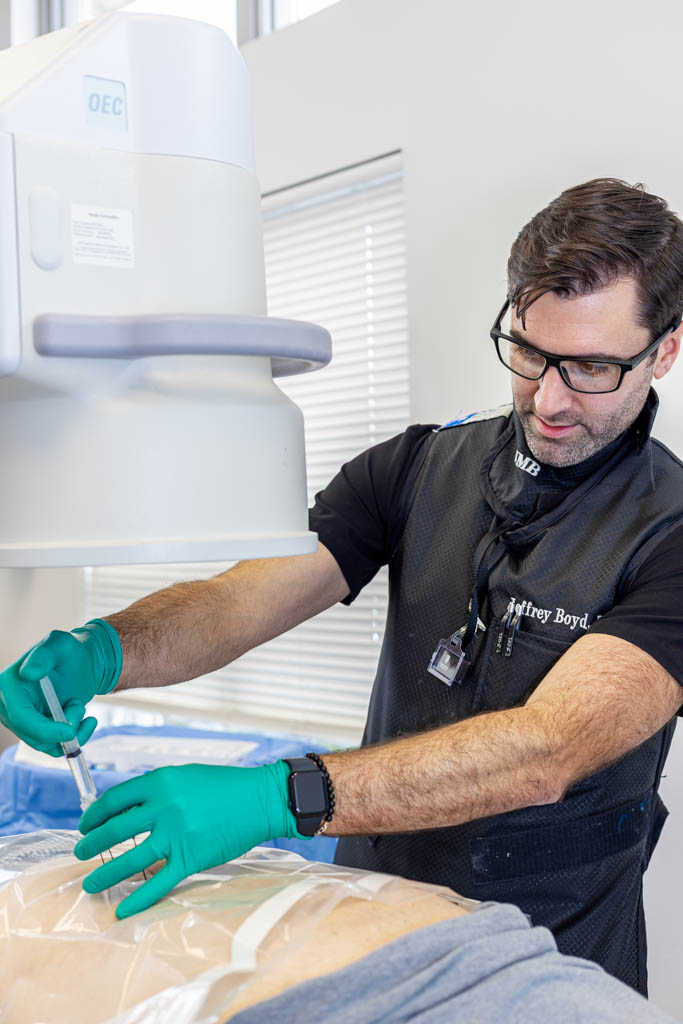
- Easy, Convenient Care Without the Hospital: Receiving treatment for cervical dystonia doesn’t have to involve a full day at the hospital. At the Pennsylvania Pain & Spine Institute, we provide diagnosis and treatment right in our offices. Our board-certified specialists – Dr. Robert Kelly, Dr. David Bozak, and Dr. Jeffrey Boyd offer evaluations and treatments such as Botox injections, trigger point injections, nerve blocks, and rehabilitation at our locations in Chalfont and Quakertown. This means patients aren’t required to visit multiple facilities.
- Efficient Procedures: The treatment at our institute is time-efficient; for instance, a typical Botox treatment, if required, can wrap up the visit in under an hour. Moreover, with no need for hospital admission or general anesthesia, patients go home on the same day.
- Comprehensive Testing Under One Roof: We coordinate diagnosis, such as EMG nerve testing, and treatment, such as an ongoing Botox injection schedule, within the same practice for your convenience.
- Two Bucks County Locations: Our Chalfont office is open Monday through Thursday from 8:00 AM to 6:00 PM, while our Quakertown office is available Tuesday and Wednesday from 8:00 AM to 6:00 PM, providing easy access for our patients around Bucks County.
- Major Insurance acceptance: We accept most major insurance plans, including Medicare, Independence Blue Cross, AmeriHealth, Highmark, Aetna, UnitedHealthcare, Tricare, UMR, and Workers’ Compensation. Please call our office to confirm your coverage.
- Trusted and Satisfied Care: Our commitment to patient-centered care is evident in the positive feedback we receive from those who have chosen us for their treatment, resulting in an impressive 4.8-star rating based on more than 160 reviews. This rating reflects not only the quality of care we try to provide but also the compassion and constant care to ensure that each patient’s needs and preferences are prioritized throughout their treatment journey.
Take the Next Step
Cervical dystonia/spasmodic torticolis is a neurological movement disorder characterized by involuntary muscle contractions in the neck, which can lead to uncomfortable twisting and positioning of the head. Fortunately, this condition can be effectively managed with the right treatment approach.
One of the most common and effective treatments involves the use of Botox injections administered in-office. Botox works by temporarily relaxing the muscles that are causing the abnormal movements. Additionally, combining Botox with other treatments such as trigger point injections can provide further relief by targeting specific areas of muscle tension. Nerve blocks may also be used to block pain signals from nerves associated with your neck or head pain. In some cases, rehabilitation therapies, including physical therapy, may help improve posture, strengthen surrounding muscles, and enhance overall neck function.

References
- Rodrigues FB, Duarte GS, Marques RE, Castelão M, Ferreira J, Sampaio C, Moore AP, Costa J. Botulinum toxin type A therapy for cervical dystonia. Cochrane Database Syst Rev. 2020;11:CD003633. doi:10.1002/14651858.CD003633.pub4. https://doi.org/10.1002/14651858.CD003633.pub4
- Simpson DM, Hallett M, Ashman EJ, et al. Practice guideline update summary: Botulinum neurotoxin for the treatment of blepharospasm, cervical dystonia, adult spasticity, and headache. Neurology. 2016;86(19):1818–1826. doi:10.1212/WNL.0000000000002560. https://doi.org/10.1212/WNL.0000000000002560
- Defazio G, Jankovic J, Giel JL, Papapetropoulos S. Descriptive epidemiology of cervical dystonia. Tremor Other Hyperkinet Mov. 2013;3. doi:10.5334/tohm.170. https://doi.org/10.5334/tohm.170
- Stacy M. Epidemiology, clinical presentation, and diagnosis of cervical dystonia. Neurol Clin. 2008;26(Suppl 1):23–42. PMID: 18603166. https://pubmed.ncbi.nlm.nih.gov/18603166/
- Kassaye SG, De Hertogh W, Crosiers D, Gudina EK, De Pauw J. The effectiveness of physiotherapy for patients with isolated cervical dystonia: an updated systematic review and meta-analysis. BMC Neurol. 2024;24:53. doi:10.1186/s12883-023-03473-3. https://doi.org/10.1186/s12883-023-03473-3
- Comella CL. Cervical Dystonia. National Organization for Rare Disorders (NORD). Updated July 2019. Accessed September 2026. https://rarediseases.org/rare-diseases/cervical-dystonia/
- Stowers JA, Day D, Alter K. Cervical Dystonia. PM&R KnowledgeNow, American Academy of Physical Medicine and Rehabilitation. Updated November 2023. Accessed September 2026. https://now.aapmr.org/cervical-dystonia/
The information on this page is for general educational purposes only and does not constitute medical advice. Treatment recommendations are based on individual clinical evaluation. Individual results may vary, and no specific outcomes are guaranteed. This content does not create a provider–patient relationship.
Proudly serving Bucks County patients with individualized, evidence-based care focused on improving function, supporting mobility, and helping patients pursue their personal health goals.

