
Cervical Disc Herniation Treatment in Chalfon,PA
Neck & Arm Pain Specialists in Bucks County
Cervical Disc Herniation Treatment in Chalfont, PA
At the Pennsylvania Pain & Spine Institute, our team of board-certified pain physicians specializes in diagnosing and treating cervical disc herniation. We provide comprehensive care to patients at our offices in Chalfont and Quakertown, employing a variety of diagnostic tools, including X-ray-guided injections and nerve blocks. Our specialists intend to identify the cause of your symptoms, calm the irritated nerve, and help you return to normal activity as your body heals - all while minimizing the need for surgery.
Most individuals with a herniated cervical disc improve without requiring surger.
Patients typically seek medical consultation when they experience:
✅ Sharp pain, numbness, or tingling sensations that extend from the neck into the shoulder, arm, and hand.
✅ Furthermore, the pain makes it difficult to turn your head while driving, posing potential safety risks.
✅ Pain and discomfort interrupt a good night's sleep, causing fatigue and impacting your overall well-being.
✅ Difficulty in maintaining focus or lower productivity while working at a computer, due to the pain or loss of sensation.
DIABETIC NEUROPATHY SPECIALISTS
What Causes Spinal Arthritis?
Most spinal arthritis develops gradually as a result of age-related changes in the spine. Additionally, several factors can accelerate the process or increase the severity of symptoms:
Age-related degeneration: Cartilage in the facet joints gradually wears away with normal aging, most commonly beginning in the fourth and fifth decades of life
Mechanical overload: Repetitive bending, twisting, and heavy lifting accelerate facet joint wear over time
Previous spinal injury: Furthermore, prior fractures, dislocations, or surgery can alter spinal mechanics and accelerate arthritis at adjacent levels
Degenerative disc disease: Consequently, as discs lose height, increased mechanical stress transfers to the facet joints and accelerates cartilage breakdown
Obesity: In particular, excess body weight increases mechanical load on the lumbar facet joints, accelerating wear
Genetic factors: Family history of spinal arthritis or degenerative joint disease increases individual risk

What Causes Cervical Disc Herniation?
Your cervical spine (neck) has seven vertebrae separated by rubbery discs that act as shock absorbers. Each disc has a tough outer ring (the annulus fibrosus) and a soft, gel-like center (the nucleus pulposus). A cervical disc herniation happens when part of that soft center pushes through a tear in the outer ring.
When the herniated material presses on a nearby nerve root, it causes inflammation and compression. This produces pain that travels down the arm, a condition called cervical radiculopathy. Less often, a large herniation can press on the spinal cord itself (myelopathy), which needs prompt medical attention.

Cervical Disc Herniation Treatment Options
Cervical epidural steroid injection
Delivers anti-inflammatory medication near the irritated nerve root under X-ray guidance
*This is done outpatient and does not require anesthesia

Trigger point injections
Relaxes tight, painful neck and shoulder muscles that often spasm around a herniated disc
*This is done outpatient and does not require anesthesia

Physical medicine & rehabilitation
Tailored exercise and recovery plan to restore neck motion and strength
*This is done outpatient and does not require anesthesia
Spinal cord stimulation
For persistent arm pain that has not responded to other care; begins with a trial
*This is done outpatient and does not require anesthesia

EMG / nerve conduction test
Measures nerve and muscle function to confirm a pinched nerve (radiculopathy)
*This is done outpatient and does not require anesthesia

Nerve block
Numbs the specific nerve linked to your pain; also helps confirm the pain source
*This is done outpatient and does not require anesthesia
Minimally Invasive, Research-Supported Treatments
Cervical Epidural Steroid Injections (ESI)
A cervical epidural steroid injection places a small amount of anesthetic and anti-inflammatory medication into the epidural space near the inflamed nerve root. Our physicians perform every spinal injection using live X-ray (fluoroscopic) guidance, which national safety recommendations call for to place medication accurately and reduce risk.
In a randomized, double-blind trial of patients with chronic neck pain from cervical disc herniation, 72% of patients who received fluoroscopically guided cervical interlaminar injections of local anesthetic, and 68% of those who received local anesthetic plus steroid, reported at least 50% improvement in both pain and function at two years. The study authors concluded:
“Fluoroscopically guided cervical interlaminar injections of local anesthetic with or without steroid effectively treat chronic neck pain due to disc herniation and radiculitis.”
— Manchikanti L, et al. Pain Physician, 2013
What to expect: The injection itself typically takes 15 to 30 minutes. You rest briefly afterward and go home the same day. Relief usually begins within two to seven days, and some people notice increased soreness during the first two to three days before it improves.
Physical Medicine, Rehabilitation, and Medication Management
Movement is part of recovery. In a randomized trial of patients with recent-onset cervical radiculopathy, six weeks of physiotherapy with home exercises reduced neck and arm pain substantially compared with a wait-and-see approach. Our physical medicine and rehabilitation care builds a recovery plan around your job, daily activities, and goals. When medication is needed, our physicians may prescribe non-opioid options and nerve-pain medications tailored to you.
Trigger Point Injections and Nerve Blocks
Neck and shoulder muscles often tighten and spasm to protect an irritated nerve, adding a second layer of pain. Trigger point injections deliver anesthetic or steroid medication directly into these tight muscle knots.
A nerve block is an X-ray-guided injection of numbing medication around the specific nerve associated with your pain. It serves two purposes: it can relieve pain, and the response helps your physician confirm exactly which nerve level is causing your symptoms before planning further treatment. Both can be combined with your other treatments – this is usually decided by your provider as needed during your consultation.
Spinal Cord Stimulation for Persistent Arm Pain
If arm pain continues despite injections, therapy, and medication, spinal cord stimulation may be an option. Thin electrical leads placed in the epidural space send mild pulses that change how pain signals reach the brain. Every patient completes a short trial first, so you can see how it works for you before making a decision about a permanent device.
Frequently Asked Questions About Cervical Disc Herniation
What is the difference between a bulging disc and a herniated disc in the neck?
A bulging disc extends uniformly beyond its normal boundary, akin to a slightly flattened cushion. In contrast, a herniated disc features a tear in its outer layer, which permits a portion of the soft inner material to protrude. Herniated discs are more prone to compressing a nerve root, resulting in symptoms such as arm pain, numbness, or tingling.
Can a herniated disc heal without surgery?
In most instances, research suggests that the majority of patients with a herniated cervical disc experience improvement through non-surgical treatment, often exhibiting significant progress within the first 4 to 6 months. Surgical intervention is generally recommended in cases of spinal cord compression, worsening weakness, or persistent pain that does not respond to other treatments.
How long does a cervical epidural steroid injection take and when will I feel better?
The administration of the injection typically requires between 15 to 30 minutes, after which the patient may return home on the same day. Most individuals begin to experience relief within a period of two to seven days. A follow-up appointment will be scheduled for the physician to assess the patient’s response to the treatment.
Do I need an EMG test for a pinched nerve in my neck?
It depends, as not everyone presents with the same symptoms. An EMG (electromyography) and nerve conduction study can effectively confirm the presence of a pinched nerve (radiculopathy) and differentiate it from other conditions, such as carpal tunnel syndrome, which may cause similar numbness in the hands. Electrodiagnostic testing is most beneficial when symptoms have been evident for several weeks. If required, we provide EMG testing at both of our locations.
Which neck discs are most commonly herniated?
Herniations predominantly affect the C6 and C7 nerve roots, which exit between the lower cervical vertebrae. A C6 nerve issue generally produces symptoms on the thumb side of the hand, whereas a C7 nerve problem typically impacts the middle finger and the back of the arm.
Common Symptoms of Cervical Disc Herniation
- Neck pain, often worse when bending the head forward or turning and tilting it back
- Sharp, burning, or electric pain that travels into the shoulder blade, arm, or hand
- Numbness or tingling (pins and needles) in the arm, hand, or fingers
- Weakness in the arm or hand, such as trouble gripping or lifting
- Neck and shoulder muscle spasms
When to Seek Urgent Care
Seek immediate medical care if you notice trouble walking or balancing, clumsiness in both hands, rapidly worsening arm weakness, or any change in bladder or bowel control. These can be signs of spinal cord compression that requires urgent evaluation.
How We Diagnose Cervical Disc Herniation
- Detailed history: patients may be asked about when symptoms started, what makes them better or worse, and how they affect work and sleep.
- Physical and neurological exam: The provider may also check reflexes, strength, sensation, and neck movement to help pinpoint the affected nerve level.
- Imaging review: If necessary, an MRI or CT may be conducted to identify the exact level and cause of nerve compression.
- EMG and nerve conduction study: Performed only when required,s based on the individual patient’s condition, at our offices to confirm radiculopathy and rule out other nerve conditions.
- Diagnostic nerve block: When needed, the physician may also perform a targeted block to confirm which nerve is generating your pain.
Research insight:“A 2021 meta-analysis of 12 randomized controlled trials found Level II evidence for radiofrequency neurotomy for both short-term and long-term improvement in chronic facet joint pain.”
Janapala RN, Manchikanti L, et al. Journal of Pain Research. 2021;14:2859–2891. PMID 34531682.
Common Causes
Risk factors for cervical disc herniation include:
- Age-related disc wear, which dries out and weakens the disc over time
- Genetics and family history of disc problems
- Work that involves repetitive lifting, overhead reaching, or sustained neck postures
- Lifestyle and cardiometabolic health factors
- Trauma such as a car accident, fall, or sports injury
Many herniations have no single clear trigger. In the Rochester population study, most patients had no preceding trauma or physical exertion.
Why Choose PA Pain & Spine Institute?
Easy, Convenient Care Without the Hospital
Getting treated for a herniated disc should not mean a full day at a hospital. At Pennsylvania Pain & Spine Institute:
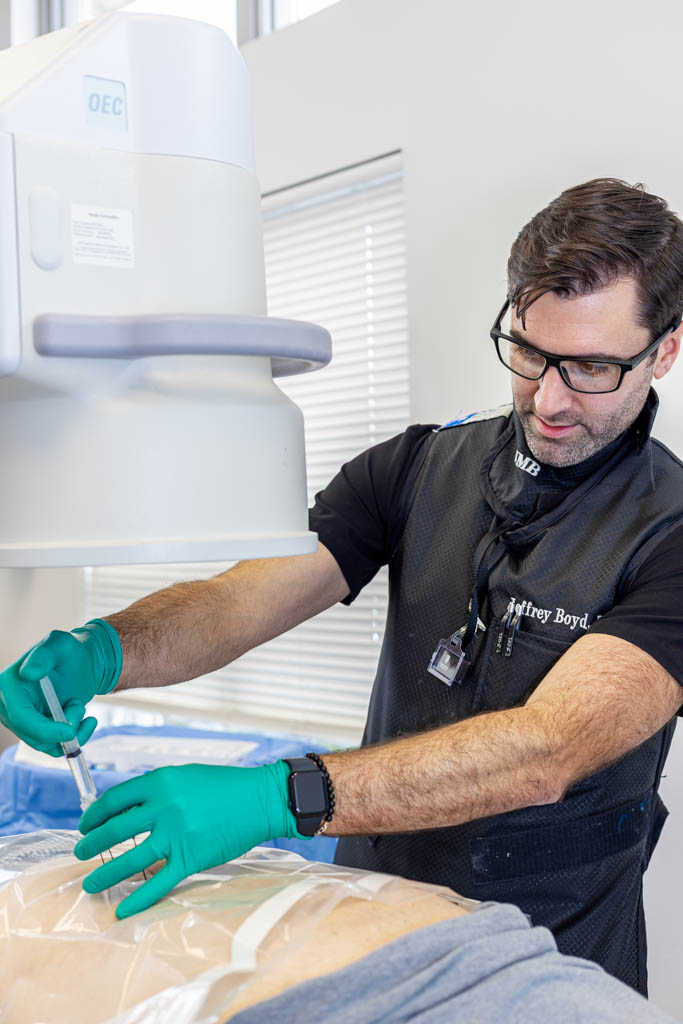
- Diagnosis and treatment happen in our offices: Evaluation and treatment procedures, such as injections and nerve blocks, as well as rehabilitation, are performed by board-certified specialists – Dr. Robert Kelly, Dr. David Bozak, and Dr. Jeffrey Boydat – at our Chalfont and Quakertown locations, so the patients are not sent between multiple facilities.
- Procedures are short: A cervical epidural steroid injection typically takes 15 to 30 minutes, followed by a short rest before you head home the same day. Patients get effective time-saving procedures on the same day.
- Testing under one roof: The same practice coordinates your evaluation, EMG nerve testing, and treatment
- Two Bucks County locations: Our Chalfont office is open Monday through Thursday, 8:00 am to 6:00 pm, and our Quakertown office is open Tuesday and Wednesday, 8:00 am to 6:00 pm; making it even more convenient for our patients in and around Bucks County.
- Major insurance accepted: We accept all major insurance plans, including Medicare, Independence Blue Cross, AmeriHealth, Highmark, Aetna, UnitedHealthcare, Tricare, UMR, and Workers’ Compensation. Call our office to confirm your coverage.
- We are rated 4.8 stars by satisfied patients across 160+ reviews.
Take the Next Step
Neck and arm pain from a herniated disc usually improves with the right non-surgical care, including X-ray-guided injections, nerve blocks, and rehabilitation. An early evaluation helps confirm the cause and catch any nerve changes that need attention.
Schedule a consultation at the closest office to:
- Receive a thorough clinical evaluation and imaging review
- Confirm whether the facet joints are the primary source of your pain
- Explore non-surgical, minimally invasive treatment options
- Develop a personalized care plan tailored to your condition and goals
Our goal is not just pain relief, but also help restore your ability to move, work, and live well.

References
- Radhakrishnan K, Litchy WJ, O’Fallon WM, Kurland LT. Epidemiology of cervical radiculopathy: a population-based study from Rochester, Minnesota, 1976 through 1990. Brain. 1994;117(2):325–335. doi:10.1093/brain/117.2.325. PMID: 8186959. https://doi.org/10.1093/brain/117.2.325
- Wong JJ, Côté P, Quesnel JJ, Stern PJ, Mior SA. The course and prognostic factors of symptomatic cervical disc herniation with radiculopathy: a systematic review of the literature. Spine J. 2014;14:1781–1789. doi:10.1016/j.spinee.2014.02.032. PMID: 24614255. https://doi.org/10.1016/j.spinee.2014.02.032
- Moley PJ. Cervical Disc Herniation. Merck Manual Professional Edition. Accessed September 2026. https://www.merckmanuals.com/professional/musculoskeletal-and-connective-tissue-disorders/neck-and-back-pain/cervical-disc-herniation
- Carrera CX, Achilova F, Rozenfeld S, Daniels AH. Pathophysiology, diagnosis, and management of cervical disc herniation. Am J Med. 2026;139(8):979–987. doi:10.1016/j.amjmed.2026.03.009. https://doi.org/10.1016/j.amjmed.2026.03.009
- Manchikanti L, Cash KA, et al. A randomized, double-blind, active control trial of fluoroscopic cervical interlaminar epidural injections in chronic pain of cervical disc herniation: results of a 2-year follow-up. Pain Physician. 2013;16:465–478. https://www.painphysicianjournal.com/
- Kuijper B, Tans JTJ, Beelen A, Nollet F, de Visser M. Cervical collar or physiotherapy versus wait and see policy for recent onset cervical radiculopathy: randomized trial. BMJ. 2009;339:b3883. doi:10.1136/bmj.b3883. https://doi.org/10.1136/bmj.b3883
- Rathmell JP, Benzon HT, Dreyfuss P, et al. Safeguards to prevent neurologic complications after epidural steroid injections: consensus opinions from a multidisciplinary working group and national organizations. Anesthesiology. 2015;122(5):974–984. doi:10.1097/ALN.0000000000000614. PMID: 25668411. https://doi.org/10.1097/ALN.0000000000000614
The information on this page is for general educational purposes only and does not constitute medical advice. Treatment recommendations are based on individual clinical evaluation. Individual results may vary, and no specific outcomes are guaranteed. This content does not create a provider–patient relationship.
Proudly serving Bucks County patients with individualized, evidence-based care focused on improving function, supporting mobility, and helping patients pursue their personal health goals.

